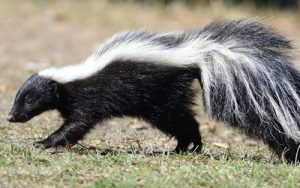
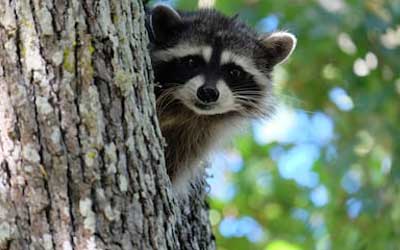

Short answer: The costliest DIY wildlife mistakes are:
- sealing an animal inside
- trapping a mother and leaving her young behind
- moving an animal more than 1 km, which isn’t allowed in Ontario
- using poison or mothballs
- cleaning droppings without protection
- patching holes with materials animals can chew through.
Exclusion, done in the right order, avoids all of them.
1. Sealing the hole while the animal is still inside
It’s the most common mistake and the most expensive. A trapped raccoon or squirrel chews a new way out, often through the soffit, the roof deck or into your living space. If it can’t get out, it dies in the wall or attic, and the smell lasts for weeks. Do instead: confirm the attic is empty, or put a one-way door on the hole before sealing.
2. Trapping or evicting a mother in baby season
Raccoons usually have young from about March to June. Squirrels have them in spring and again in late summer, and skunks around May to July. Remove the mother and the babies are left behind. Do instead: check for young before any removal in those months. Babies can be removed by hand and placed where the mother will move them.
3. Moving the animal “far away”
Ontario’s rules say a live-captured animal must be released within 1 kilometre of where it was caught, within 24 hours, and on private land only with the owner’s permission. Moving it farther is not allowed, it spreads disease, and it usually means a slow death in unfamiliar territory. Do instead: exclusion keeps the animal in its home range and keeps it out of your house.
4. Using poison
Poison isn’t a humane or legal fix for raccoons, squirrels or skunks. Pesticides in Canada may only be used as their label directs, and rodent baits can kill pets and other wildlife. A poisoned animal in the attic or walls also leaves a dead-animal smell. Do instead: remove animals alive and seal the entry.
5. Relying on mothballs, ammonia, lights or radios
Mothballs are a pesticide meant for clothes moths, and using them in attics or under decks is off-label. Their fumes, and ammonia’s, can get into the house. Lights and radios may unsettle an animal for a night. Mothers with young, and well-fed animals, usually ignore all of them. Do instead: use deterrents only as a short-term nudge while you exclude.
6. Handling droppings without protection
Raccoon droppings can carry raccoon roundworm eggs, which are dangerous if swallowed, for example from dusty hands or surfaces. Large bat-guano deposits can carry a fungus linked to histoplasmosis. Do instead: don’t sweep or vacuum droppings dry: mist them first. Wear disposable gloves and an N95 respirator in confined spaces, or leave heavy contamination to a professional.
7. Patching with the wrong materials
Squirrels chew through plastic, wood, foam and caulk. Raccoons tear through thin aluminium and plastic vents. Do instead: use heavy-gauge galvanized steel mesh, metal flashing and steel vent guards, fastened to solid structure.
8. Fixing one hole and ignoring the rest
Animals test every weak spot. Close the main hole but leave a soft soffit corner a metre away, and you’ll get a new hole there within days. Do instead: inspect the whole roofline, chimney, vents and foundation, and seal every gap the animal could use.
9. Waiting it out
A small vent hole becomes a soaked roof deck, ruined insulation and chewed wiring. Babies grow and make more noise and more mess. Do instead: book an inspection at the first sign of activity. Earlier jobs are smaller jobs.
What to do the moment you hear an animal
- Note when you hear it (night, morning, dusk) and where (ceiling, wall, under the deck). See what animal is in my attic?
- Look at the roofline from the ground for torn vents, chewed soffits or a lifted cap.
- Keep children and pets away, and don’t corner the animal.
- Don’t block any hole yet.
- Call a wildlife removal company that seals entry points, not just one that traps.
How to choose a wildlife removal company
Ask:
- Do you seal the entry points as part of the job?
- How do you handle babies?
- Do you follow Ontario’s 1 km release rule?
- What does your guarantee cover?
- Is the inspection credited to the job?
Be wary of anyone promising to “trap and relocate it far away”. That isn’t allowed in Ontario.
Wildlife in your house in Niagara?
Pro Wildlife Niagara removes raccoons, squirrels, skunks and bats humanely and seals the entry points so they can’t return. Inspections are $75–$100 plus HST and are credited toward the work. Raccoon and squirrel exclusion typically runs $700–$1,500 plus HST. See the wildlife removal price guide or call 289-273-2251.
Related: Humane raccoon removal laws · Squirrel traps not working · Raccoon babies in attics · Professional raccoon removal · Animal control in St. Catharines
Frequently asked questions
Can I remove a raccoon from my attic myself?
Ontario allows homeowners to deal with wildlife damaging their property, but the rules are strict. Live-caught animals must be released within 1 kilometre, within 24 hours, and only with the landowner’s permission. In spring there are usually babies in the attic too. Most homeowners get better results from a one-way door and professional sealing.
Is it legal to relocate wildlife in Ontario?
Only within 1 kilometre of where the animal was caught. Ontario’s protection-of-property rules require release within 1 km and within 24 hours, on private land only with the owner’s permission, and humane handling throughout. Moving raccoons, squirrels or skunks across town is not allowed, and it spreads disease and rarely solves the problem.
What is the biggest mistake people make with animals in the attic?
Sealing the entry hole while the animal, or its babies, is still inside. A trapped raccoon or squirrel will chew a new way out, often causing more damage, or die inside the attic or wall. Always confirm the space is empty or use a one-way door before sealing with metal.
Sources
- Government of Ontario, “Harass, capture or kill a wild animal damaging private property”: https://www.ontario.ca/page/harass-capture-or-kill-wild-animal-damaging-private-property
- Poison Control, skunk spray and wildlife (irritant, decontamination): https://www.poison.org/articles/what-happens-if-a-skunk-sprays-me-213
- CDC, “Preventing Raccoon Roundworm”: https://www.cdc.gov/baylisascaris/prevention/index.html (mist latrines, gloves, N95 in confined spaces)
- CCOHS, “Histoplasmosis”: https://www.ccohs.ca/oshanswers/diseases/histopla.html (bat droppings; avoid disturbing; respiratory protection)