
Short answer: Listen for when you hear it.
- Heavy thumping at night: usually raccoons.
- Fast scurrying at dawn and dusk: squirrels.
- Faint squeaks and rustling at dusk: bats.
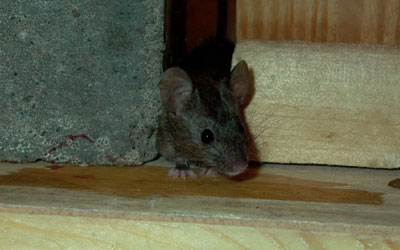
- Light scratching inside walls or near the furnace at night: mice.
- A musky smell under the deck or porch: a skunk.
Then confirm it with the entry hole and the droppings.
Which animal is it? Quick comparison
| Animal | When you hear it | What it sounds like | Other signs | Usual way in |
|---|---|---|---|---|
| Raccoon | Night, especially just after dark and before dawn | Heavy walking, thumping, chirring kits in spring | Torn roof vent or soffit, crushed insulation, droppings in one pile | Roof vents, soffit corners, chimneys |
| Grey/red squirrel | Early morning and late afternoon | Quick running, rolling “nut” sounds, chewing | Chewed fascia, soffit or vent edges; squirrels on the roof | Roof vents, roofline gaps, soffit returns |
| Bat | Dusk and dawn | Faint squeaks, rustling behind walls | Small dark droppings that crumble; greasy stains at a gap; bats leaving at dusk | Gaps of 1–2 cm at fascia, ridge or chimney flashing |
| Mouse | Night, inside walls and ceilings | Light scratching and pattering | Rice-sized droppings, chewed boxes, droppings near the furnace or under sinks | Foundation cracks, pipe and wire holes, garage doors |
| Skunk (basement, deck, porch) | Night | Rarely heard; you smell it | Musky smell, a hole under the deck or porch, small cone-shaped holes in the lawn | Gaps under decks, porches, sheds and crawlspaces |
Raccoons in the attic
Raccoons are the heaviest attic animal in Niagara, so the noise sounds like someone walking above the ceiling. From about March to June, mothers move into attics and chimneys to have their young, and you may hear chirring or crying. Look up at roof vents and soffit corners from the street. A raccoon entry is usually torn open and obvious.
Next step: what to do if a raccoon is living in your roof · raccoon removal
Squirrels in the attic
Squirrels keep “office hours”: they’re busiest early in the morning and late in the afternoon. Grey squirrels chew larger holes at roof vents and soffits. Red squirrels squeeze through smaller gaps. Most squirrel litters arrive in spring and again in late summer.
Next step: signs of squirrels in your attic · squirrel removal
Bats in the attic or walls
Bats are quiet. Many homeowners first notice droppings on a deck or windowsill below a gap, or see bats leaving the roofline at dusk. Bat droppings crumble to dust when crushed; mouse droppings don’t. Several Ontario bat species are protected, and young can’t fly in midsummer, so timing matters.
Next step: bat removal and exclusion
Mice in the walls or basement
Mice move indoors as the weather cools in fall. The sound is a light pattering inside walls or ceilings at night. Look for droppings along the basement walls, behind appliances and near the furnace. Mice fit through gaps about the width of a pencil, so foundation cracks and pipe openings matter.
Skunks under the deck, porch or basement
Skunks don’t get into attics, but they den under decks, porches, sheds and crawlspaces next to basements. Signs include a hole about the size of a grapefruit at the edge of the structure, a musky smell at night and small cone-shaped holes in the lawn where they dig for grubs.
Next step: how to tell if you have a skunk in your yard · skunk removal
How do animals get into a house?
Most wildlife gets in through a weak spot that’s already there. From the roof down, check:
- roof vents and plumbing stack collars
- soffit corners and returns, and rotted fascia
- gaps where roof sections meet
- uncapped chimneys and loose flashing
- gable and exhaust vents
- openings around wires and pipes
- foundation cracks
- gaps under decks, porches and sheds.
An animal that can get its head through a gap can usually get its body through too.
What should I do once I know what it is?
Don’t seal the hole yet. If an animal or its young is still inside, it will chew a new way out, sometimes into your living space, or die in the wall. The right order is:
- Confirm the animal.
- Check for young.
- Let the animals out with a one-way door or exit.
- Seal every entry point with chew-proof material.
Ontario rules allow a live-caught animal to be released only within 1 km of where it was caught, so exclusion works better than trapping and moving it.
Not sure what you’re hearing?
Pro Wildlife Niagara inspects attics, rooflines and decks across the Niagara Region to confirm the animal and find every entry point. The inspection is $75–$100 plus HST and is credited toward the work. Raccoon and squirrel exclusion typically runs $700–$1,500 plus HST; see the price guide. Call 289-273-2251.
Related: Wildlife removal in St. Catharines
Frequently asked questions
What animal is scratching in my attic at night?
Heavy thumping or walking at night usually means raccoons. Light, fast scratching at night inside walls or ceilings is more often mice. Squirrels are mostly active early in the morning and late in the afternoon, and bats make faint squeaks around dusk. Check the roofline for a torn vent or chewed gap to confirm which animal it is.
What animal is in my attic during the day?
Daytime running, scurrying and chewing in the attic is almost always squirrels. They’re most active early in the morning and late in the afternoon and are quiet at night. Look for chewed edges on roof vents, fascia or soffits, and watch for squirrels coming and going at the roofline in the morning.
Can I just block the hole?
Not until you’re sure every animal is out. Sealing a raccoon, squirrel or bat inside traps it, and it may chew into your living space or die in the wall. In spring and summer there may be young inside. Use a one-way door first, confirm the attic is empty, then seal with metal.
Sources
- Government of Ontario, “Harass, capture or kill a wild animal damaging private property”: https://www.ontario.ca/page/harass-capture-or-kill-wild-animal-damaging-private-property (1 km release rule)
- Government of Ontario, Species at risk in Ontario (bats): https://www.ontario.ca/page/species-risk-ontario