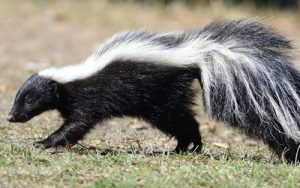
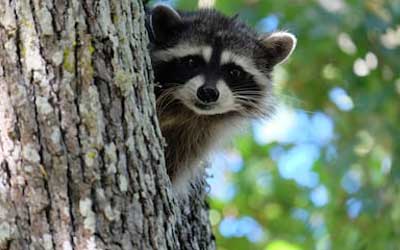
Short answer: the DIY wildlife mistakes that cost Niagara homeowners the most are:
- sealing an animal inside
- removing a mother in baby season and leaving her young behind
- moving an animal more than 1 km, which isn’t allowed in Ontario
- putting out loose, store-bought poison, or using mothballs
- cleaning droppings without protection
- patching holes with materials animals chew through
Raccoons, squirrels, skunks and bats are handled by exclusion: getting the animal out and closing the way in. Mice and rats are different. For them, a licensed company uses locked, tamper-resistant bait stations, which is not the same thing as scattering poison yourself. Mistake 4 explains why.
1. Sealing the hole while the animal is still inside
It’s the most common mistake and the most expensive. A raccoon or squirrel that’s shut in will chew a new way out, often through the soffit, the roof deck or into your living space. If it can’t get out, it dies in the wall or attic, and the smell can last for weeks. Do instead: make sure the attic is empty first, or have a professional fit a one-way door on the hole before anything is sealed.
2. Removing a mother in baby season
Raccoons usually have young from about March to June. Squirrels have them in spring and again in late summer, and skunks around May to July. Remove the mother and the babies are left behind. Do instead: check for young before any removal in those months. Babies can be removed by hand and placed where the mother will move them.
3. Moving the animal “far away”
Ontario’s rules say a live-captured animal must be released within 1 kilometre of where it was caught, within 24 hours, and on private land only with the owner’s permission. Moving it farther isn’t allowed, it can spread disease, and the animal often doesn’t survive in unfamiliar territory. Do instead: exclusion keeps the animal in its home range and keeps it out of your house.
4. Using loose, store-bought poison
Poison isn’t the answer for raccoons, squirrels or skunks. In Canada, a pest control product may only be used the way its label directs, and rodent baits aren’t made for these animals. A poisoned animal in the attic or walls also leaves a dead-animal smell.
For mice and rats, the problem isn’t bait itself. It’s loose bait in the wrong hands and the wrong places. Pellets or blocks tossed behind a stove or under a deck can be found by children, pets and other wildlife, and mice and rats can carry loose bait to new spots. That’s why Health Canada requires home-use rodent bait to come packaged in tamper-resistant bait stations, and keeps some stronger products for licensed professionals only.
How locked bait stations placed by a licensed pro are different
- Licensed. Pro Wildlife Niagara holds an Ontario structural exterminator licence, and we use products only as their labels direct.
- Locked stations only. The bait goes inside locked, tamper-resistant bait stations, never loose. The stations are designed to keep children and pets away from the bait.
- Placed with a plan. We inspect first, then place stations along the routes mice or rats actually travel, instead of guessing.
- Paired with prevention. We check the outside of your home for obvious entry points and seal small gaps during the visit, and point out food and shelter that draw rodents in.
- Documented. The name of the bait product we used is printed on every invoice, which some municipal rebate programs ask for.
Do instead: for raccoons, squirrels and skunks, remove the animal alive and seal the entry. For mice and rats, skip the loose poison and call a licensed company. See mouse control and rat control for how our bait station visits work.
5. Relying on mothballs, ammonia, lights or radios
Mothballs are a pesticide meant for clothes moths, and using them in attics or under decks is off-label. Their fumes, and ammonia’s, can get into the house. Lights and radios may unsettle an animal for a night, but mothers with young, and well-fed animals, usually ignore them. Do instead: treat deterrents as a short-term nudge at most, and deal with the way in.
6. Handling droppings without protection
Raccoon droppings can carry raccoon roundworm eggs, which are dangerous if swallowed, for example from dusty hands or surfaces. Large bat-guano deposits can carry a fungus linked to histoplasmosis. Mouse droppings and urine can carry germs too. Do instead: don’t sweep or vacuum droppings dry. Mist them first, wear disposable gloves and an N95 respirator in confined spaces, or leave heavy contamination to a professional.
7. Patching with the wrong materials
Squirrels chew through plastic, wood, foam and caulk. Raccoons tear through thin aluminium and plastic vents. Mice fit through gaps about the width of a pencil. Do instead: for wildlife, use heavy-gauge metal screening, metal flashing and steel vent guards fastened to solid structure. For small gaps around pipes and wires, pack steel wool and caulk over it.
8. Fixing one hole and ignoring the rest
Animals test every weak spot. Close the main hole but leave a soft soffit corner a metre away, and a new hole can appear there within days. Do instead: inspect the whole roofline, chimney, vents and foundation, and deal with every gap the animal could use.
9. Waiting it out
A small vent hole can turn into a soaked roof deck and chewed wiring. Babies grow and make more noise and more mess, and a few mice can become many. Do instead: book an inspection at the first sign of activity. Earlier jobs are usually smaller jobs.
What to do the moment you hear an animal
- Note when you hear it (night, morning, dusk) and where (ceiling, wall, under the deck). See what animal is in my attic?
- Look at the roofline from the ground for torn vents, chewed soffits or a lifted cap.
- Keep children and pets away, and don’t corner the animal.
- Don’t block any hole yet, and don’t put out loose poison.
- Call a licensed company that deals with the way in, not just the animal.
How to choose a wildlife or rodent control company
Ask:
- Do you seal the entry points as part of the job?
- How do you handle babies?
- Do you follow Ontario’s 1 km release rule?
- For mice and rats: are you licensed, and do you use locked bait stations?
- What’s covered after the job, and for how long? Get it in writing.
- How does the inspection fee work?
Be wary of anyone promising to “take it far away”. That isn’t allowed in Ontario.
Wildlife or rodents in your house in Niagara?
Pro Wildlife Niagara removes raccoons, squirrels, skunks and bats and seals the entry points we find. For mice and rats, we use locked, tamper-resistant bait stations and seal small gaps during the visit. See the wildlife removal price guide, our rat control and mouse control pages, or call (289) 273-2251, 8:30 AM–5:00 PM, 7 days a week.
Related: Raccoon removal laws in Ontario · Squirrels still in the attic? · Raccoon babies in attics · Professional raccoon removal · Animal control in St. Catharines
Frequently asked questions
Can I remove a raccoon from my attic myself?
Ontario allows homeowners to deal with wildlife damaging their property, but the rules are strict. Live-caught animals must be released within 1 kilometre, within 24 hours, and only with the landowner’s permission. In spring there are usually babies in the attic too. Most homeowners get better results from professional removal and sealing.
Is it legal to relocate wildlife in Ontario?
Only within 1 kilometre of where the animal was caught. Ontario’s rules require release within 1 km and within 24 hours, on private land only with the owner’s permission. Moving raccoons, squirrels or skunks across town isn’t allowed, and it can spread disease and rarely solves the problem.
Is poison a good way to get rid of mice or rats?
Not loose, store-bought poison. It can be found by children, pets and other wildlife, and rodents can carry it around. A licensed company places bait inside locked, tamper-resistant bait stations along the routes mice and rats travel, and pairs that with sealing small gaps and removing food sources.
What is the biggest mistake people make with animals in the attic?
Sealing the entry hole while the animal, or its babies, is still inside. A raccoon or squirrel that’s shut in will chew a new way out, often causing more damage, or die inside the attic or wall. Always make sure the space is empty before it’s sealed with metal.
Sources
- Government of Ontario, Harass, capture or kill a wild animal damaging private property
- Health Canada, Commercial class rodenticides: tamper-resistant bait station requirements
- Health Canada, Re-evaluation Note REV2010-17 (rodenticides; bait stations for home-use products)
- CDC, Preventing Raccoon Roundworm
- CCOHS, Histoplasmosis