
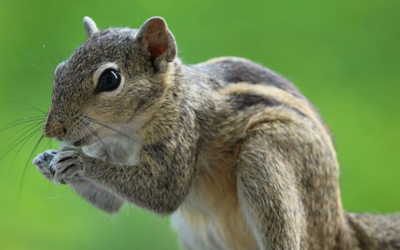
Short answer: Squirrel traps fail for four reasons:
- The trap is in the wrong place.
- The squirrels have plenty of other food.
- There are more squirrels, or babies, than you think.
- Ontario requires you to release a trapped squirrel within 1 km, so it often comes straight back.
For squirrels in an attic, a one-way door on the entry hole plus sealing every gap works better than any trap.
Why won’t the squirrel go in the trap?
- Wrong spot. A trap in the middle of the yard competes with every bird feeder and oak tree on the street. Squirrels are wary of new objects in open spaces.
- Too much food around. Fall acorns, bird seed and garden produce make bait less tempting.
- The trap moves or smells of people. A trap that wobbles or clanks will make a squirrel avoid it.
- It’s the wrong size. Red squirrels and grey squirrels need different trap sizes. See red squirrels vs grey squirrels in attics.
- It’s not the squirrel you think. Daytime attic noise is usually squirrels. Night-time noise is often raccoons or mice, which a squirrel trap won’t solve. See what animal is in my attic?
Why do more squirrels keep showing up?
Trapping removes an animal, not the hole. An open entry point on your roof is an invitation to the next squirrel. Squirrels also leave scent trails that lead others to the same gap. If you caught one squirrel and the noise continues, there’s likely another adult, a litter, or a second entry point.
What does Ontario law say about trapping squirrels?
Property owners can deal with nuisance wildlife damaging their property, but there are rules. A live-captured animal must be:
- released within 1 kilometre of where it was caught
- released within 24 hours
- released on private land only with the owner’s permission
- handled humanely, and you can’t capture more animals than you need to.
Squirrels released 1 km away can often find their way home. That’s why trapping alone rarely fixes an attic problem.
Why trapping in baby season is a bad idea
Grey squirrels usually have litters in early spring and again in late summer. If you trap a nursing mother, her babies are left in the attic. They die in the insulation and cause an odour problem, or they cry for days. Before any removal from March to May or August to September, someone needs to check for young.
What works better than a trap?
For squirrels living in the house, exclusion:
- Find every entry point. Check roof vents, soffit returns, fascia, roof intersections and gable vents.
- Seal the secondary gaps with heavy-gauge metal so there’s only one way in and out.
- Install a one-way door on the main hole. Squirrels leave to feed and can’t get back in.
- Check for babies in season, and remove them by hand if needed so they can be reunited with the mother.
- Remove the door and seal the last hole with chew-proof material once activity stops.
This keeps the squirrel within its home range, which meets Ontario’s 1 km rule, and fixes the reason it got in. See how professionals remove squirrels from attics.
If you still want to trap a squirrel in the yard
- Put the trap on a flat, stable surface along the squirrel’s regular route, like a fence line or the base of a tree, in shade.
- Check it often, at least twice a day, and never leave an animal in a trap in heat or cold.
- Release it within 24 hours and within 1 km of the capture site, with the landowner’s permission.
- Don’t trap in spring or late summer if there’s any chance of nursing young.
Still hearing squirrels in Niagara?
Pro Wildlife Niagara removes squirrels with one-way doors and seals the roofline with metal across the Niagara Region. An inspection is $75–$100 plus HST and is credited toward the work. Squirrel exclusion typically runs $700–$1,500 plus HST; small jobs are around $500. See squirrel removal and the price guide, or call 289-273-2251.
Related: Wildlife removal in Welland
Frequently asked questions
Why is my squirrel trap not catching anything?
Most traps fail because they’re in the wrong place, there’s better food nearby, or the trap wobbles and smells of people. Squirrels avoid unfamiliar objects in open spaces. If the squirrel lives in your attic, trapping in the yard rarely catches it. A one-way door on the attic entry hole works more reliably.
Can I relocate a squirrel in Ontario?
Only within 1 kilometre of where you caught it, and within 24 hours. Ontario rules also require the landowner’s permission to release it on private land and humane handling throughout. Many squirrels released that close return to the same house. That’s why sealing the entry point matters more than trapping.
What’s the best way to get squirrels out of the attic?
Exclusion. Seal secondary gaps with metal, install a one-way door on the main entry so squirrels can leave but not return, check for babies in spring and late summer, then seal the final hole. It’s humane, follows Ontario’s release rules and fixes the opening the squirrels used.
Sources
- Government of Ontario, “Harass, capture or kill a wild animal damaging private property”: https://www.ontario.ca/page/harass-capture-or-kill-wild-animal-damaging-private-property (1 km / 24 h / landowner permission / humane treatment)