Hearing noises coming from your ceiling late at night can be alarming. In many cases throughout Niagara Falls and surrounding areas, those sounds are caused by raccoons living inside the roof or attic of a home. Raccoons are highly adaptable animals that frequently move into residential properties in search of warmth, shelter, and a safe place to raise their young.
If you suspect a raccoon is living on your roof, it is important to act carefully and avoid making the situation worse. Many homeowners attempt quick fixes that end up causing more damage or trapping animals inside the home.
Understanding how raccoons behave and what steps to take can help protect your property and ensure the issue is handled properly.
How Raccoons Get Into Roofs
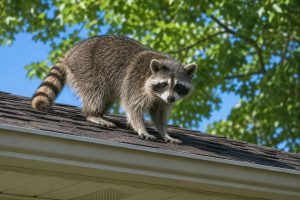
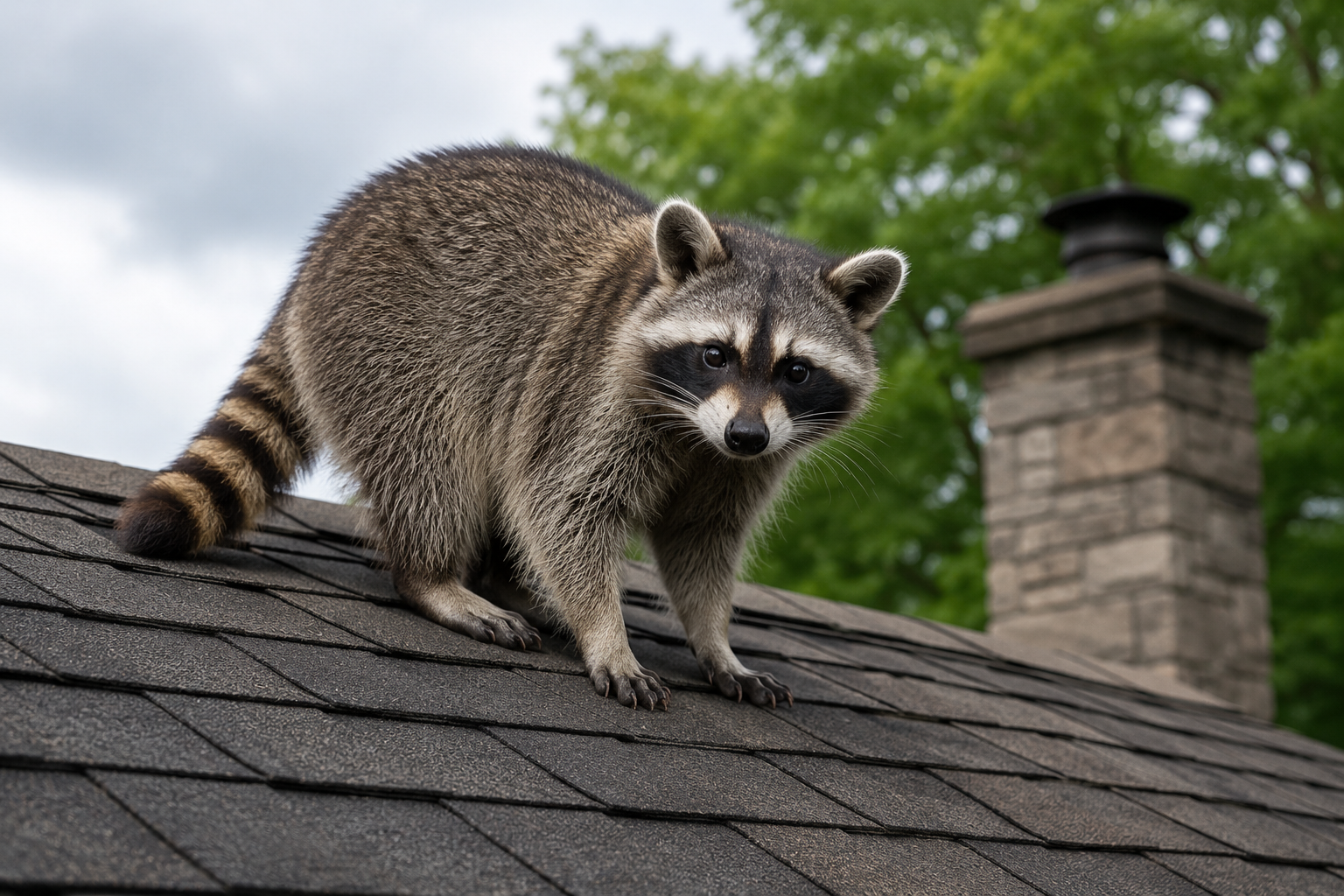
Raccoons are excellent climbers and can easily access rooftops using downspouts, fences, trees, and nearby structures. Once on the roof, they search for weak or damaged areas that can be used as entry points.
Roof vents are one of the most common access points because many are made from lightweight plastic or thin metal. Raccoons can tear through these materials surprisingly quickly. Soffits, fascia boards, roof edges, and damaged shingles are also vulnerable areas. If there is even a small gap, a raccoon may enlarge it to fit inside. Once entry is gained, the attic becomes an ideal shelter. It is warm, dark, dry, and usually undisturbed.
Signs a Raccoon Is Living in Your Roof
The most common sign is heavy noise at night. Unlike mice or squirrels, raccoons are large animals, so the sounds they create are often loud and obvious.
Homeowners may hear:
- Thumping or walking above the ceiling
- Scratching or dragging noises
- Movement near roof vents or soffits
- Chirping or crying sounds during spring
Inside the attic, signs can include disturbed insulation, droppings, strong odours, and nesting material. Baby raccoons are often present in the spring months, which adds another layer of noise inside the attic. Outside the home, you may notice damaged vents, torn soffits, or visible entry holes along the roofline. Some homeowners also spot raccoons climbing onto the roof at night.
Quick checklist: signs a raccoon is living in your roof
- Heavy walking or thumping in the ceiling after dark and before dawn
- Chirring or crying from March to June: kits
- A torn roof vent, lifted shingles or a pushed-up soffit corner, often visible from the street
- Droppings in one spot on a flat roof, deck or in the attic (a “latrine”). Don’t clean them up without gloves and a mask
- Smudges and claw marks on downspouts or corners
- Flattened or scattered insulation, and stains on the ceiling below
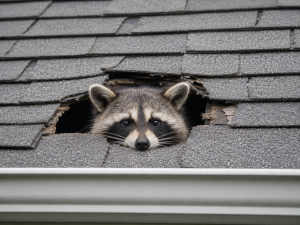
Stay Calm and Avoid Direct Contact
If you discover a raccoon living on your roof, the first step is to avoid direct interaction. Raccoons may appear calm from a distance, but they can become defensive if they feel cornered or threatened. This is especially true if babies are present.
Never attempt to handle a raccoon yourself. Approaching the animal can lead to scratches or bites, and raccoons may carry parasites or diseases that pose risks to humans and pets. Keeping a safe distance is important until the situation can be professionally assessed.
Do Not Seal the Entry Point Immediately
One of the biggest mistakes homeowners make is sealing the entry hole too quickly. While it may seem logical to block the raccoon from getting back inside, doing so can create serious problems if the animal or its babies are still in the attic.
A trapped raccoon will often panic and attempt to claw its way back out through the roof or ceiling. This can result in even more structural damage. If babies are inside and the mother is locked out, the young may be abandoned in the attic. This leads to ongoing noise, odours, and contamination issues. Before any entry point is sealed, the attic must be properly inspected.
Avoid DIY Trapping
Many homeowners consider trapping as a quick solution, but wildlife removal laws in Ontario place restrictions on trapping and relocation. Raccoons cannot legally be relocated long distances without authorization, and improper trapping can create unnecessary stress and harm to the animal.
Trapping also does not address the real problem. If the entry point into the roof remains open, another raccoon may move in shortly afterward. Professional wildlife removal focuses on exclusion and prevention rather than simply removing the animal temporarily.
Understand the Importance of Baby Season
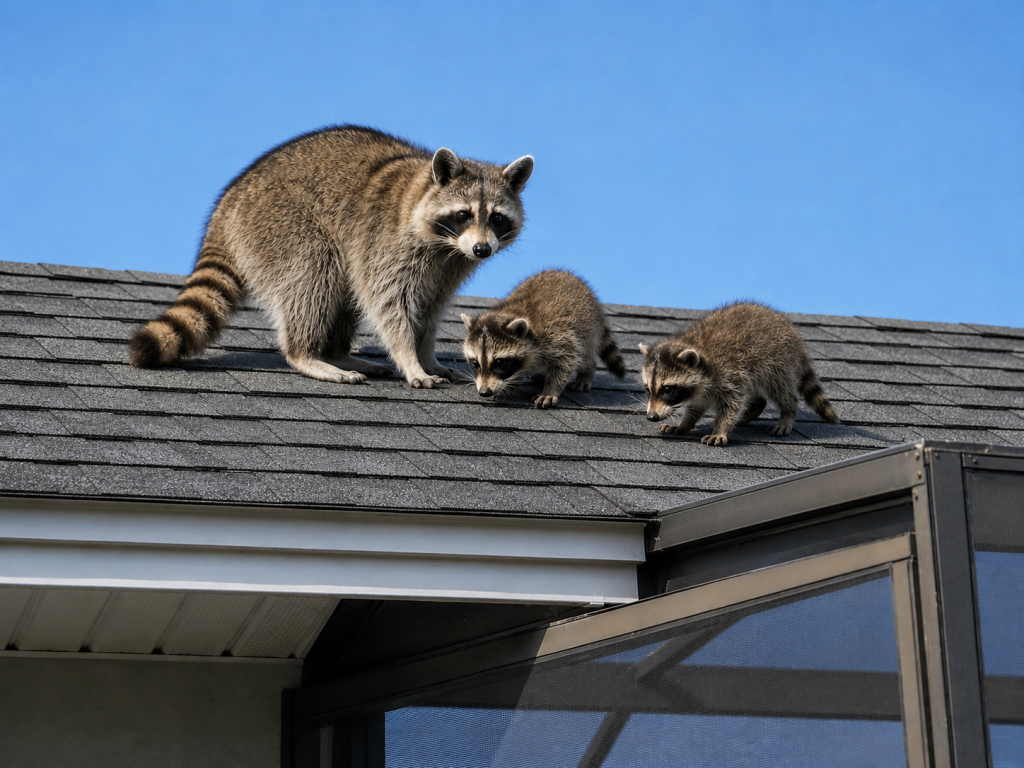
In Niagara, raccoon baby season typically takes place between March and May. During this period, female raccoons often choose attics as nesting areas. If you hear chirping or whining sounds during spring, there is a strong chance babies are present.
This makes removal more delicate because the babies cannot survive without their mother. Humane removal methods are necessary to keep the family together while ensuring they leave the home safely. A professional inspection can determine whether babies are present and guide the correct removal process.
Why Humane Exclusion Works Best
Humane exclusion is considered the most effective and responsible way to remove raccoons from a roof or attic. This process involves installing a one-way door over the entry point. The raccoon can leave the attic through the device but cannot re-enter. If babies are present, they are carefully removed and placed outside near the entry point so the mother can relocate them to another den site.
Once all raccoons have left, the entry point is permanently sealed using strong wildlife-proof materials. This method solves the issue without harming the animals and helps prevent future infestations.
Inspect the Roof for Damage
After raccoons are removed, it is important to assess the condition of the roof and attic. Raccoons often leave behind significant damage. Roof vents may be broken, soffits torn open, and insulation disturbed or contaminated. The longer raccoons remain in the attic, the more extensive the damage usually becomes.
Professional wildlife removal companies often provide repair and exclusion services to restore vulnerable areas and reinforce the home against future intrusions.
Need it handled? See our raccoon removal in St. Catharines and across Niagara.
Clean and Sanitize the Attic
Even after the raccoons are gone, cleanup remains an important step. Raccoon droppings and urine can contaminate insulation and create strong odours throughout the home. Nesting material may also attract insects and create additional issues.
In some cases, damaged insulation needs to be removed and replaced. Sanitizing the attic helps eliminate bacteria, odours, and contamination left behind by the animals. Proper cleanup restores the attic to a safer and healthier condition.
Prevent Future Raccoon Problems
Once a raccoon has successfully entered your roof, there is a higher chance other raccoons may attempt to use the same area in the future. Prevention is essential for long-term protection. Homeowners should regularly inspect roof vents, soffits, and roof edges for signs of wear or damage. Weak materials should be reinforced with steel covers or wildlife-proof mesh.
Tree branches hanging close to the roof should also be trimmed back to reduce access points. Keeping garbage bins secured and eliminating outdoor food sources can help make the property less attractive to wildlife overall.
Why Professional Help Matters
Raccoon removal is not just about getting the animal out of the attic. It requires understanding wildlife behaviour, identifying all entry points, and ensuring the issue does not happen again. Professional wildlife technicians know how to remove raccoons safely and humanely while protecting the home from additional damage.
Without proper exclusion work, many homeowners end up dealing with recurring raccoon problems year after year. A professional approach provides a more permanent solution and helps avoid costly repairs down the road.
Book Raccoon Removal With Pro Wildlife Niagara
If you suspect a raccoon is living on your roof, acting quickly can help reduce damage and prevent the situation from getting worse. Niagara Wildlife specializes in humane raccoon removal, attic inspections, roof vent protection, and wildlife-proofing services throughout Niagara Falls and surrounding areas. Our team safely removes raccoons, identifies how they entered the home, and seals vulnerable areas to help prevent future infestations.
Ignoring the problem can lead to more damage, contamination, and expensive repairs. Contact Niagara Wildlife today to book an inspection and protect your home from raccoon activity on your roof.
Related: Raccoon damage in the attic · Wildlife removal price guide