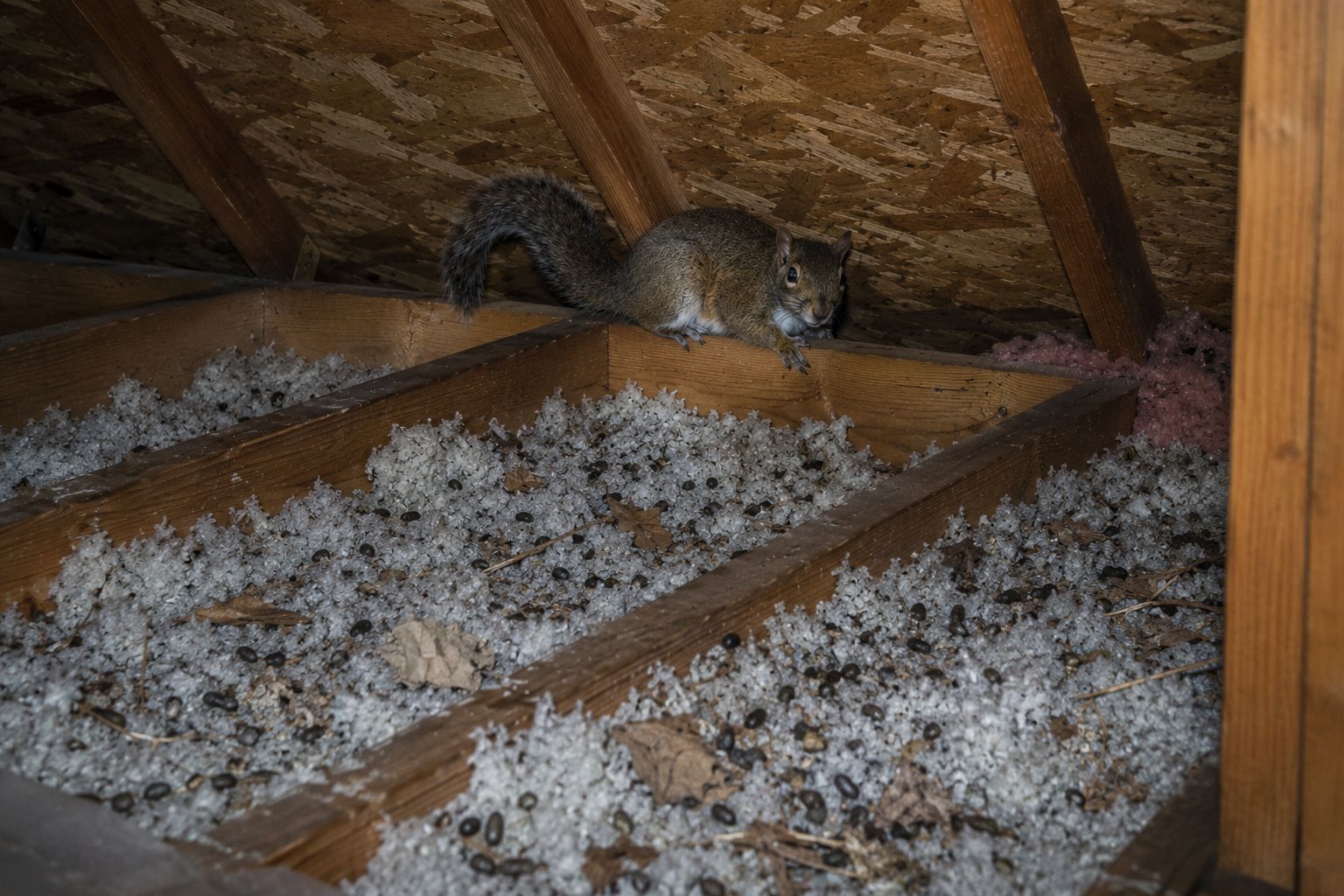
Squirrels may look harmless as they run through trees or across rooftops, but once they enter an attic, they can quickly become one of the most destructive wildlife problems a homeowner can face. Every year, homeowners throughout Niagara Falls and the surrounding communities discover that squirrels have damaged insulation, chewed wiring, contaminated attic spaces, and created costly structural problems.
Many people assume a squirrel in the attic is simply an annoyance because of the scratching noises overhead. In reality, the longer squirrels remain inside a home, the greater the chance of expensive repairs. Their natural behaviours, including chewing, nesting, and storing food, can significantly impact the condition of your home.
Understanding the damage squirrels cause inside attics can help homeowners recognize the warning signs early and arrange professional removal before the problem becomes more serious.
Why Squirrels Enter Attics
Attics provide nearly everything a squirrel needs to survive. They offer protection from predators, shelter from harsh weather, and a warm place to build a nest. Female squirrels frequently choose attics during breeding season because they provide a safe environment for raising young.
Once squirrels find a comfortable attic, they often continue returning unless every entry point has been professionally repaired. This means even a small roof opening can eventually lead to significant interior damage if left unchecked.
Damaged Insulation Is One of the Most Common Problems
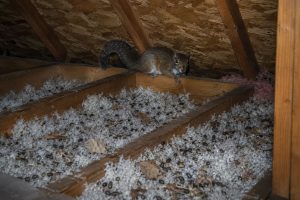
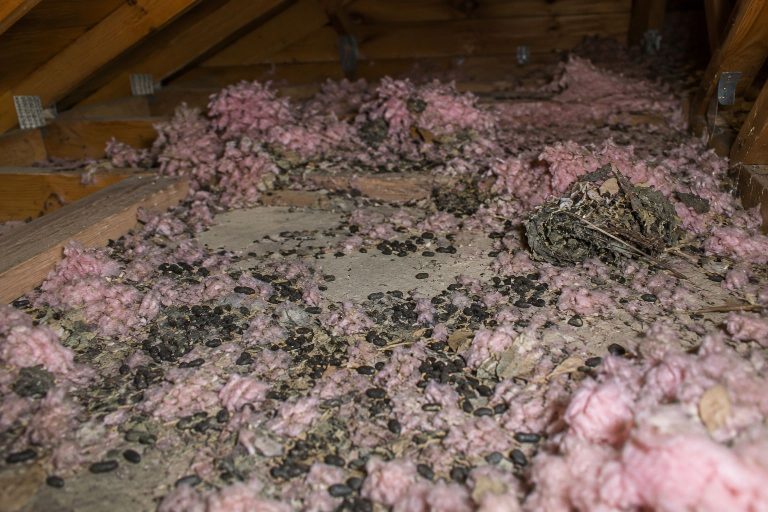
Insulation is often the first thing squirrels disturb after entering an attic. They dig through loose-fill or fiberglass insulation to create pathways and build nesting areas. Instead of remaining evenly distributed across the attic floor, the insulation becomes compressed, piled up, or scattered throughout the space.
Compressed insulation loses much of its ability to slow heat transfer. This reduces your home’s energy efficiency and can increase heating and cooling costs throughout the year. If squirrels remain in the attic for an extended period, large sections of insulation may need to be removed and replaced.
Nest Building Creates Additional Damage
Squirrels rarely use insulation alone when building nests. They collect leaves, twigs, paper, cardboard, fabric, and other soft materials to create comfortable nesting sites. Some of these materials are brought in from outside, while others come directly from inside the attic. The nesting process often involves tearing apart insulation and moving it into concentrated piles.
Female squirrels preparing to give birth typically create larger nests that provide warmth and protection for their young. These nesting areas often require complete cleanup after the squirrels have been removed.
Chewed Electrical Wiring
One of the most serious dangers associated with squirrels is their habit of chewing electrical wiring. Squirrel teeth never stop growing, so they constantly chew to keep them worn down. Unfortunately, electrical cables inside an attic provide a convenient target.
Chewed wire insulation exposes electrical conductors, increasing the risk of short circuits and electrical fires. Even minor chewing damage can require costly electrical repairs throughout the attic. For this reason alone, squirrel infestations should never be ignored.
Damage to Wooden Structures
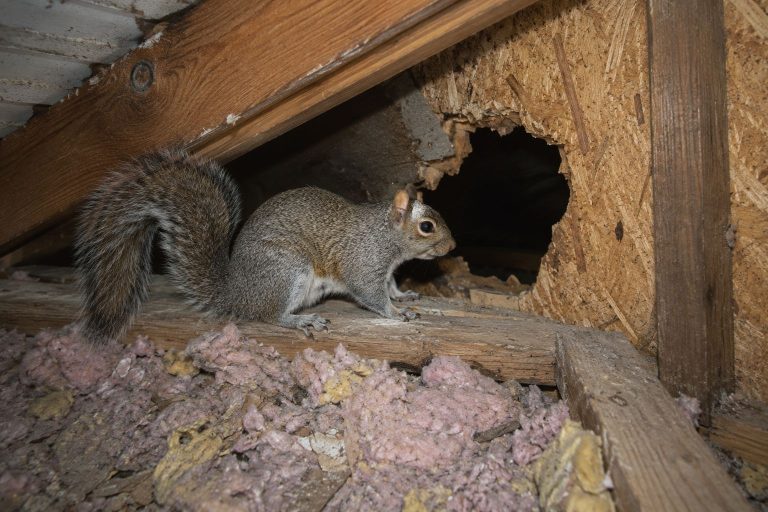
Squirrels also chew wooden framing, roof decking, rafters, and support members. Although they are not attempting to destroy the structure itself, constant chewing gradually weakens building materials and enlarges entry holes.
The damage is often most noticeable around roof edges where squirrels first gained access. Over time, small chew marks can develop into larger openings that allow water infiltration or provide access for additional wildlife.
Roof Vent Damage
Many attic infestations begin when squirrels chew through roof vents. Plastic roof vents are particularly vulnerable because squirrels can easily chew through them. Once the vent cover has been damaged, squirrels gain direct access to the attic below.
Even after the squirrels leave, the damaged vent continues allowing rain, snow, insects, and other wildlife to enter unless it is repaired. Replacing damaged roof vents with wildlife-resistant materials helps reduce future problems.
Soffit and Fascia Damage
Squirrels commonly enter homes through soffits and fascia boards. These areas are located along the roof edge and often contain small weaknesses caused by weather, moisture, or age. A squirrel may begin by chewing a small hole before enlarging it enough to squeeze inside.
Once the opening has been created, additional squirrels may continue using the same access point for years if repairs are not completed. Visible chew marks, splintered wood, and damaged trim are all common signs of squirrel activity.
Contaminated Attic Spaces
Like all wildlife, squirrels leave waste behind. Droppings and urine accumulate throughout the attic as squirrels continue using the same nesting area. Over time, these materials contaminate insulation and create unpleasant odours that may eventually spread into the living areas of the home.
Moisture from urine can also contribute to mould growth and wood deterioration if left untreated. After a significant infestation, professional attic cleanup may be recommended to restore the space safely.
Food Storage Creates Additional Problems
Unlike many homeowners realize, squirrels frequently store food inside attics.
Acorns, walnuts, pine cones, seeds, and other food sources may be hidden beneath insulation or tucked between framing members.
These food caches can attract insects and create additional sanitation concerns.
Stored food may also contribute to unpleasant odours if it begins decomposing over time.
Finding large quantities of nuts inside an attic is often a strong indicator of squirrel activity.
Noise Throughout the Home
One of the earliest signs of squirrel damage is the noise they create.
Since squirrels are active during the daytime, homeowners often hear scratching, running, chewing, and rolling sounds shortly after sunrise and again during the afternoon.
The activity may seem minor at first, but the constant movement indicates squirrels are actively nesting, gathering materials, or enlarging entry points.
Ignoring these noises allows the damage to continue.
Entry Holes Continue to Grow
Squirrels rarely stop chewing once they have entered. Small roof openings often become much larger over time. A gap that originally measured only a few centimetres can eventually expand into a sizeable hole requiring major roof repairs.
As the opening grows, rainwater can enter the attic and cause additional structural damage. Other wildlife, including raccoons, birds, bats, and mice, may also begin using the same opening.
Baby Squirrels Increase the Complexity
During spring and late summer, many attic infestations involve baby squirrels. Female squirrels seek safe locations before giving birth, making attics one of their preferred nesting sites. Removing squirrels during baby season requires special care.
If the mother is excluded while the babies remain inside, the young squirrels can become trapped in the attic. Professional wildlife removal companies use humane methods that reunite mothers and babies before permanently sealing entry points.
Why DIY Repairs Often Fail
Many homeowners attempt to solve the problem by simply covering the entry hole. Unfortunately, this rarely addresses the underlying issue. If squirrels are still inside, they often chew new holes through the roof, soffit, or fascia while attempting to escape.
Even if the animals leave successfully, another squirrel may quickly discover the same vulnerable area if proper wildlife-proof repairs have not been completed. Professional inspections identify every potential entry point, not just the most obvious one.
Long-Term Financial Costs
The longer squirrels remain inside an attic, the more expensive the repairs become.
Damage may include:
- Replacement of contaminated insulation
- Roof vent repairs
- Soffit and fascia replacement
- Electrical repairs
- Structural wood repairs
- Attic sanitization and deodorization
- Wildlife-proofing vulnerable roof areas
Addressing the problem early is almost always less expensive than waiting until major repairs become necessary.
How Professional Squirrel Removal Protects Your Home
Professional wildlife removal focuses on both removing the squirrels and preventing them from returning. A complete inspection identifies active entry points, nesting locations, and any structural damage that has occurred.
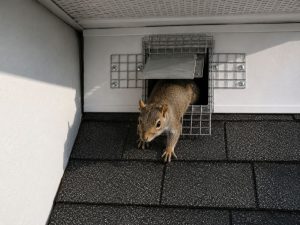
Humane one-way doors allow squirrels to leave safely while preventing them from re-entering the attic.
Once the attic has been confirmed empty, technicians permanently repair damaged roof vents, soffits, fascia boards, and other vulnerable areas using durable wildlife-resistant materials. This approach provides a long-term solution instead of a temporary fix.
Contact Niagara Wildlife Removal
If you’ve been hearing scratching noises above your ceiling or have noticed squirrels running across your roof, it’s important to act before they cause extensive damage inside your attic.
Niagara Wildlife Removal provides professional, humane squirrel removal services throughout Niagara Falls and the surrounding communities. Our experienced wildlife technicians perform thorough attic inspections, safely remove squirrels using humane exclusion methods, repair damaged entry points, and wildlife-proof vulnerable areas to help prevent future infestations.
Don’t wait until a small squirrel problem turns into a costly attic repair. Contact Niagara Wildlife Removal to schedule a professional inspection and protect your home from further squirrel damage.