Squirrels are among the most common wildlife animals that invade homes throughout Niagara Falls and the surrounding region. While many homeowners enjoy watching squirrels in their yards, these animals can become a serious problem once they gain access to an attic, wall cavity, or roof space.
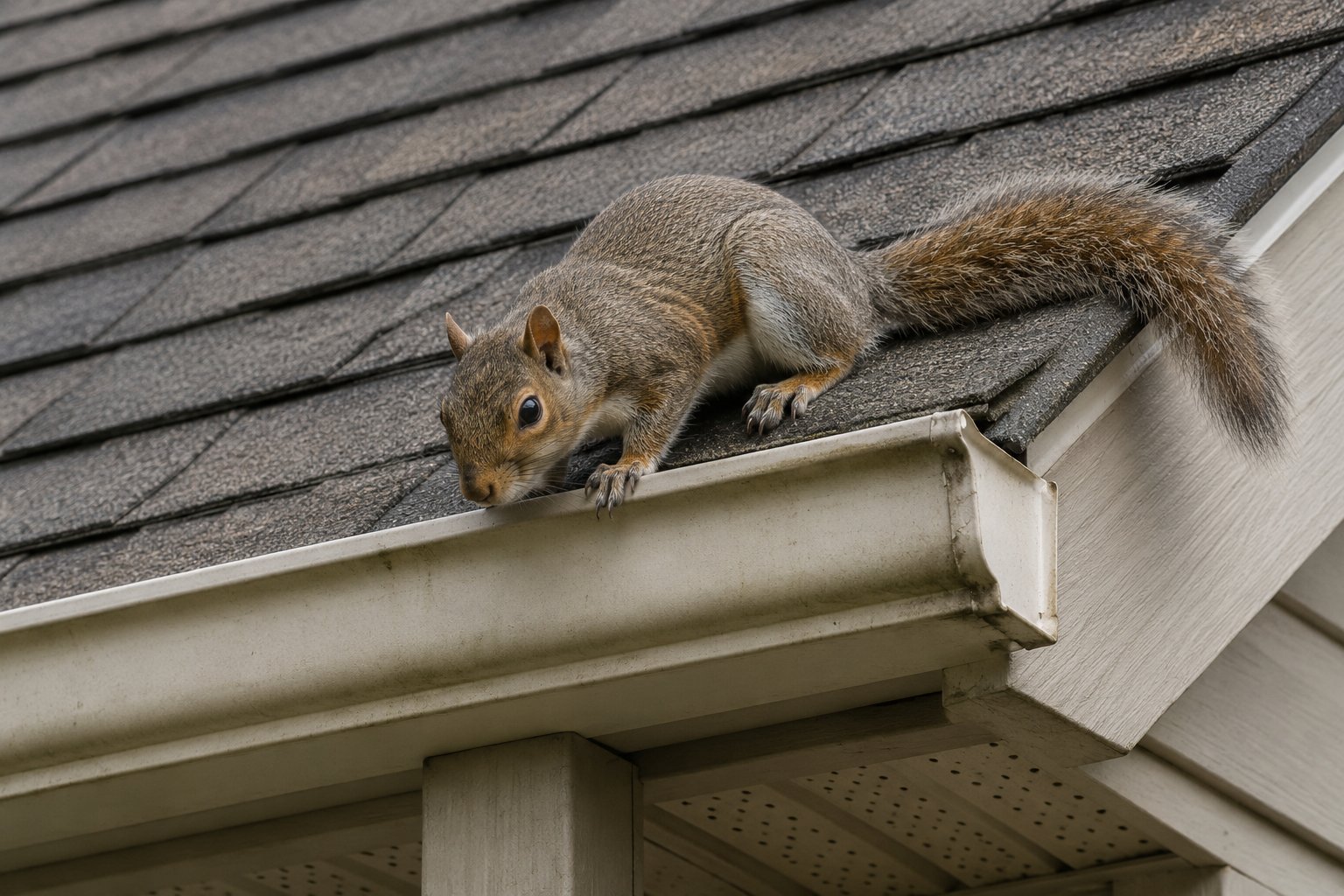
Many people are surprised to learn that squirrels rarely enter homes through doors or ground-level openings. Instead, they are skilled climbers that use rooftops, trees, and structural features to reach vulnerable areas high above the ground. Once they identify a weak point, they can quickly chew, claw, or squeeze their way inside.
Understanding how squirrels enter homes in Niagara can help homeowners recognize potential risks and take preventative measures before a small issue turns into a costly wildlife problem.
Why Squirrels Want to Get Inside
Before looking at entry points, it is important to understand why squirrels target homes in the first place. Attics provide ideal shelter. They are warm during the winter, dry during rainstorms, and protected from predators. Female squirrels often seek attic spaces during breeding seasons because they offer a safe location to raise young.
In Niagara, squirrels face fluctuating weather throughout the year. During cold winters and wet spring conditions, attics become especially attractive nesting locations. Once squirrels discover a secure indoor space, they often return repeatedly unless the entry point is properly repaired.
Roof Vents Are One of the Most Common Entry Points
Roof vents are frequently the first place squirrels target. Many residential roof vents are constructed from plastic or lightweight materials that are designed for ventilation rather than wildlife resistance. Squirrels can easily chew through these materials to create an opening large enough for entry. Because squirrels have strong front teeth that never stop growing, chewing is a natural behaviour. A plastic vent cover provides both a convenient chewing surface and access to a warm attic below.
Wildlife technicians throughout Niagara regularly encounter roof vents that have been partially or completely destroyed by squirrels. In many cases, homeowners do not realize the vent has been damaged until they begin hearing noises inside the attic.
Soffits and Roof Overhangs
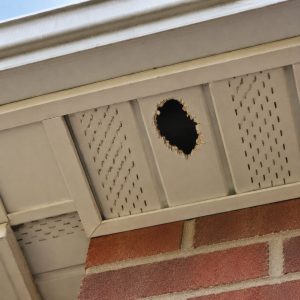
Soffits are another common access point. The soffit is the underside of the roof overhang that connects the roof edge to the exterior wall. While soffits help ventilate the attic and protect the roof structure, they can become vulnerable when damaged or deteriorated.
Squirrels often climb onto roof edges and inspect these areas for weaknesses. If the material has softened from moisture or age, squirrels may chew through it to gain access. Even small openings can eventually become larger as squirrels continue chewing. Once inside the soffit area, the attic is often only a short distance away.
Fascia Boards and Roofline Gaps
The fascia board runs along the edge of the roof and supports the gutter system. Over time, exposure to weather can cause fascia boards to weaken, crack, or rot. Squirrels are quick to exploit these vulnerable areas. A squirrel may begin by enlarging a small gap and eventually create an opening large enough to enter the roof cavity.
Homes with older roofing systems are often more susceptible to fascia-related entry problems. Routine roof inspections can help identify these issues before wildlife takes advantage of them.
Gable Vents
Gable vents provide airflow to attic spaces and are commonly found on the exterior walls near roof peaks. While many gable vents are protected by screens, older screens may rust, tear, or become detached over time.
Squirrels are capable of chewing through damaged screening or forcing weak sections open. Once the screen is compromised, the vent provides direct access to the attic. Because gable vents are often located high above the ground, homeowners may not notice damage until squirrels have already moved inside.
Chimneys and Chimney Gaps
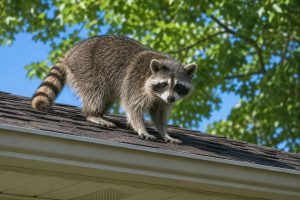
Although raccoons are often associated with chimney intrusions, squirrels also use chimneys to enter homes. An uncapped chimney can provide direct access to interior spaces. Even if squirrels do not enter the living area itself, they may nest inside chimney structures.
Small gaps where flashing meets the chimney can also create opportunities for entry into attic spaces. Installing a properly fitted chimney cap helps reduce this risk.
Construction Gaps and Building Defects
Not all squirrel entry points are created by damage. Some homes contain small construction gaps that provide enough space for squirrels to enter. These openings may occur where roof sections meet, where siding transitions occur, or around utility penetrations.
Many of these gaps go unnoticed for years until wildlife discovers them. Squirrels are extremely curious and spend a significant amount of time exploring rooflines. A gap that seems insignificant to a homeowner may appear as a perfect entry point to a squirrel.
Tree Branches Give Squirrels Easy Access
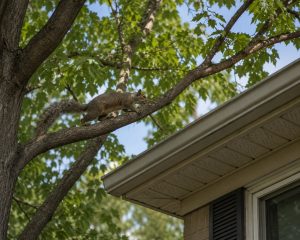
One of the biggest factors contributing to squirrel infestations is the presence of nearby trees. Squirrels can leap impressive distances and often use branches as highways to reach rooftops. Branches hanging close to the home make roof access simple and frequent.
Once on the roof, squirrels can spend hours investigating potential entry points. While trimming branches can reduce access, it does not eliminate existing entry holes. Homes that already have vulnerable roof areas may still experience problems even after nearby trees are pruned.
Signs That Squirrels Have Entered Your Home
Homeowners often become aware of squirrel activity only after the animals have already moved inside. The most common sign is daytime noise coming from the attic. Unlike raccoons, squirrels are active during daylight hours, especially during the morning and late afternoon. Other signs may include:
- Scratching or running noises overhead
- Visible damage to roof vents or soffits
- Nesting materials in the attic
- Squirrel droppings
- Squirrels frequently seen entering the same area of the roof
The earlier these signs are addressed, the less damage squirrels are likely to cause.
What Happens After Squirrels Get Inside
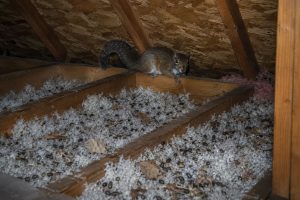
Once squirrels gain entry, they begin creating nests and establishing territory. Insulation is often disturbed as squirrels create bedding areas. Some squirrels store food inside attic spaces, while others chew wood framing and electrical wiring. Electrical damage is one of the most serious concerns because exposed wires can increase fire risk. The longer squirrels remain inside, the greater the likelihood of extensive attic damage. In some situations, female squirrels may give birth in the attic, making removal more complicated.
Why DIY Repairs Often Make Things Worse
Many homeowners attempt to solve squirrel problems by immediately sealing the entry hole. While this seems logical, it can create serious complications if squirrels are still inside. Trapped squirrels may chew through other parts of the roof or wall system while attempting to escape.
If baby squirrels are present, sealing the mother outside can leave young animals trapped inside the attic. Effective squirrel removal requires confirming that all animals have exited before repairs are completed.
How Professionals Remove Squirrels
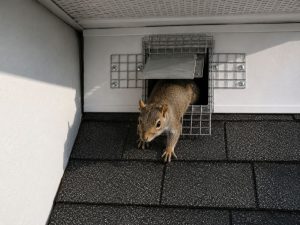
Professional wildlife removal begins with a thorough inspection of the home. Technicians identify active entry points, assess attic activity, and determine whether young squirrels are present. Humane one-way doors are commonly installed over entry points. These devices allow squirrels to leave but prevent them from returning. Once the animals have exited, damaged areas are repaired using durable wildlife-resistant materials. Roof vents, soffits, fascia boards, and other vulnerable areas can also be reinforced to help prevent future infestations.
Protect Your Niagara Home From Squirrels
Squirrels are persistent animals that can find their way into homes through surprisingly small openings. Roof vents, soffits, fascia boards, gable vents, and construction gaps all provide opportunities for entry when left unprotected.
Understanding how squirrels enter homes allows homeowners to recognize potential vulnerabilities before major damage occurs. If you have noticed squirrel activity around your roofline or are hearing noises in your attic, professional intervention can help prevent costly repairs and ongoing wildlife issues.
Book Squirrel Removal With Niagara Wildlife Removal
Niagara Wildlife Removal provides professional squirrel removal, attic inspections, roof vent repairs, and wildlife-proofing services throughout Niagara Falls and the surrounding region. Our experienced team identifies entry points, removes squirrels safely and humanely, and reinforces vulnerable areas to help keep wildlife out for good.
If you suspect squirrels have entered your home, contact Niagara Wildlife Removal today to schedule an inspection and protect your property from further damage.