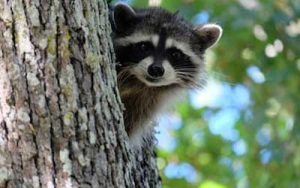
Raccoons are one of the most common wildlife problems homeowners face in the Niagara Region. These intelligent and adaptable animals thrive in urban environments and often look for warm, sheltered places to raise their young. Unfortunately, attics provide the perfect environment. They offer warmth, safety from predators, and easy access through common roofing structures.
Many homeowners in Niagara Falls, St. Catharines, Welland, and surrounding communities do not realize raccoons have entered their attic until the activity becomes loud or damage begins to appear inside the home. Recognizing the early signs of raccoons in your attic can help prevent costly repairs and serious contamination issues.
If you suspect raccoons may be living in your attic, it is important to act quickly and contact a professional wildlife removal company that specializes in humane removal and exclusion.
Why Raccoons Target Attics in Niagara Homes
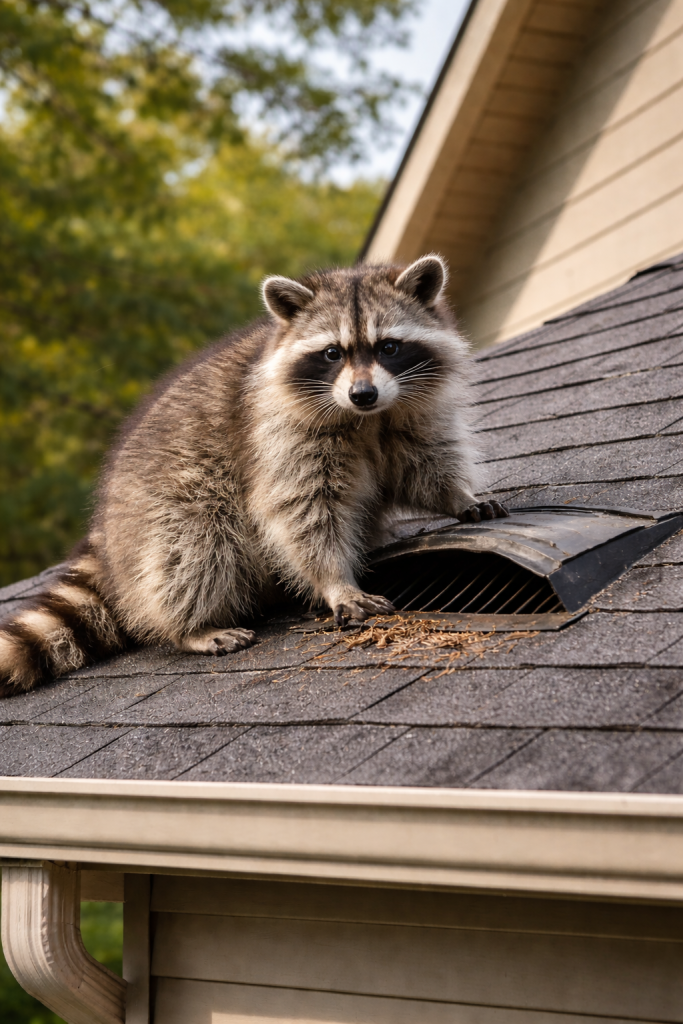
Raccoons are highly resourceful animals that are excellent climbers. They easily scale downspouts, brick walls, fences, and nearby trees to reach the roofline of a home. Once on the roof, they search for weak points that allow them to enter the attic. Many homes in Niagara have roof vents, soffits, and roofline gaps that raccoons can exploit. Roof vents are particularly vulnerable because they often contain lightweight plastic or aluminum covers that raccoons can tear open with their strong paws.
Attics provide raccoons with a quiet and protected environment where they can nest and raise babies, especially during the spring months. Once inside, they will build nesting areas in insulation and may remain in the attic for weeks or even months. Recognizing the early warning signs can help homeowners address the problem before the damage becomes severe.
Loud Noises in the Ceiling or Attic
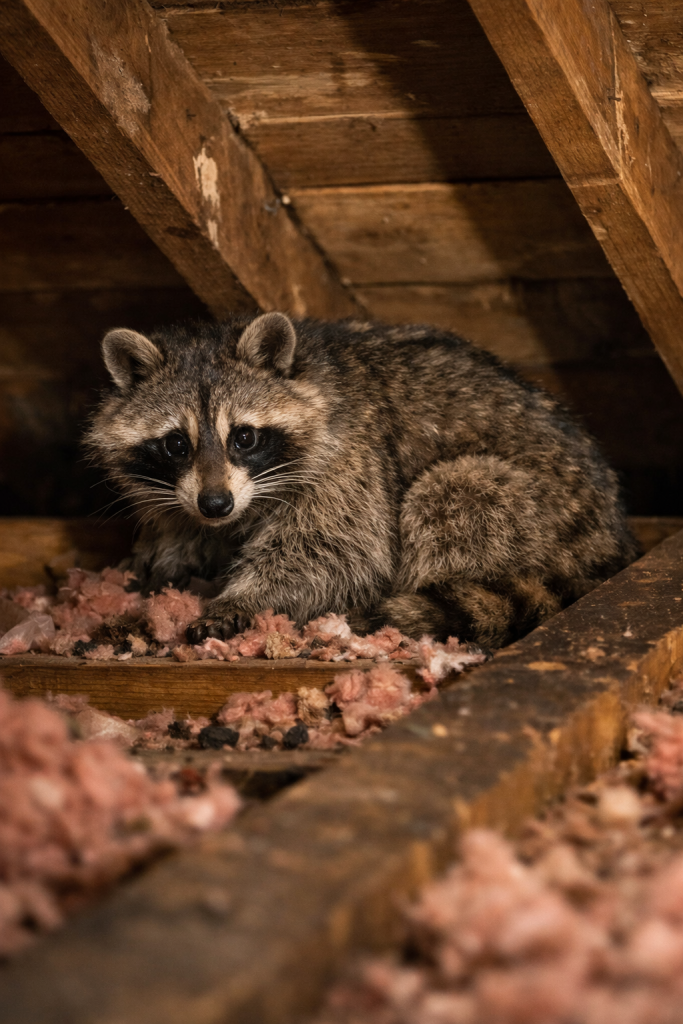
One of the most common signs of raccoons in an attic is loud noise coming from above the ceiling. Unlike mice or squirrels, raccoons are relatively large animals. Adult raccoons can weigh between 10 and 20 pounds, so their movements often sound heavy.
Homeowners often report hearing thumping, dragging, or slow walking sounds above their ceilings. These noises tend to occur during the evening, overnight, or early morning hours because raccoons are primarily nocturnal animals.
During the spring months, the sounds may become more frequent as baby raccoons begin to move around the nest. Young raccoons often produce chirping, whining, or crying sounds that can travel through the attic and into the living areas of the home. If the noises coming from your attic sound heavier than the typical scratching associated with small rodents, raccoons may be the cause.
Visible Roof Damage
Raccoons usually enter attics by damaging exterior parts of the roof. Homeowners may notice bent roof vents, torn shingles, damaged soffits, or holes near the roofline.
Roof vents are a particularly common entry point. Raccoons will rip open the vent cover and widen the opening until it is large enough to crawl inside. From the ground, the damage may appear as a bent or partially collapsed vent. Soffits are another vulnerable area. If soffits become loose or deteriorate with age, raccoons can push them open and squeeze into the attic.
After raccoons enter a home, they often return to the same entry point repeatedly. Over time the damage may become larger and more visible. Inspecting the roofline from the ground may reveal clear signs of wildlife activity.
Strong Odours Inside the Home
Raccoons living in an attic often create strong and unpleasant odours inside the home. These smells develop as raccoons use areas of the attic as a bathroom and contaminate insulation with droppings and urine.
The smell may initially appear as a musty or animal-like odour. As contamination increases, the scent can become stronger and may spread through ventilation systems or ceiling cavities. In severe cases, homeowners may also notice staining on ceilings caused by urine soaking through insulation and drywall.
Attic contamination is more than just an unpleasant smell. Raccoon droppings can contain bacteria and parasites that pose health risks to humans. Proper cleanup and sanitization are often required after raccoons are removed.
Insulation Damage in the Attic
Raccoons typically build nests in attic insulation. They compress and tear insulation to create soft nesting areas where they can rest and raise their young.
When homeowners inspect their attic, they may notice flattened insulation, scattered debris, or visible nesting areas. Insulation may appear disturbed or piled in certain areas. In many cases, raccoons will also leave behind food scraps such as garbage, fruit, or other materials they bring into the attic. Damaged insulation reduces the energy efficiency of a home and may require replacement once wildlife has been removed.
Droppings and Tracks
Raccoon droppings are another clear sign of wildlife presence in an attic. Their droppings are larger than those of most other animals commonly found in homes. Tracks may also be visible in dusty attic spaces or on insulation surfaces. Raccoon footprints resemble small handprints with five fingers, which makes them relatively easy to identify. In some cases, homeowners may notice tracks along rooflines, decks, or outdoor surfaces leading toward the home.
Increased Outdoor Wildlife Activity
Sometimes the first signs of raccoons are seen outside the home rather than inside. Homeowners may notice raccoons frequently visiting the roof, climbing downspouts, or walking along fences.
Raccoons are common throughout the Niagara Region and often search residential neighbourhoods for food and shelter. Garbage bins, compost containers, and pet food can attract them to properties. If raccoons are repeatedly seen around your home, it may indicate they have already established a den nearby or inside the attic.
Why DIY Raccoon Removal Can Be Risky
Many homeowners attempt to remove raccoons themselves, but this approach often leads to additional problems. Raccoons can be aggressive when they feel threatened, especially if babies are present. Improper removal attempts may also trap baby raccoons inside the attic, leading to distress calls and potential mortality. This situation often creates additional odour problems and requires professional intervention.
Wildlife removal professionals understand raccoon behaviour and use humane methods to safely remove animals while ensuring that babies are reunited with their mother whenever possible. Professional services also focus on preventing raccoons from returning by sealing entry points and reinforcing vulnerable areas of the roof.
Humane Raccoon Removal in Niagara
In Ontario, wildlife removal must be performed in accordance with humane practices and local regulations. Professional wildlife removal companies use exclusion techniques that allow raccoons to leave the attic without harming them.
One-way doors are commonly installed at entry points, allowing raccoons to exit the attic but preventing them from re-entering. Once the animals have left, the entry point is permanently sealed with durable materials such as steel vent covers or reinforced mesh. This approach ensures the raccoons are removed safely while protecting the home from future intrusions.
Protecting Your Home From Raccoons
Preventing raccoons from entering a home often involves reinforcing the most vulnerable parts of the roofline. Roof vents should be covered with heavy-duty metal vent guards that raccoons cannot tear open.
Soffits, roof edges, and other potential entry points should be inspected regularly and repaired if necessary. Keeping garbage containers secured and removing outdoor food sources can also help reduce wildlife activity around the property. Regular inspections of the roof and attic can help homeowners detect early signs of wildlife before a problem becomes severe.
Call Niagara Wildlife Removal for Raccoon Problems
If you are hearing noises in your attic or suspect raccoons may be living in your home, professional help is the safest and most effective solution. Niagara Wildlife Removal specializes in humane raccoon removal throughout the Niagara Region. Our technicians perform detailed inspections to identify entry points, remove raccoons safely, and install professional wildlife-proofing solutions that prevent the problem from returning.
Ignoring the signs of raccoons in your attic can lead to extensive damage and contamination. Addressing the problem early can protect your home and save you from costly repairs. If you suspect raccoons may be in your attic, contact Niagara Wildlife Removal today to schedule an inspection and protect your home from further wildlife damage.