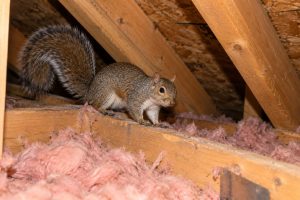
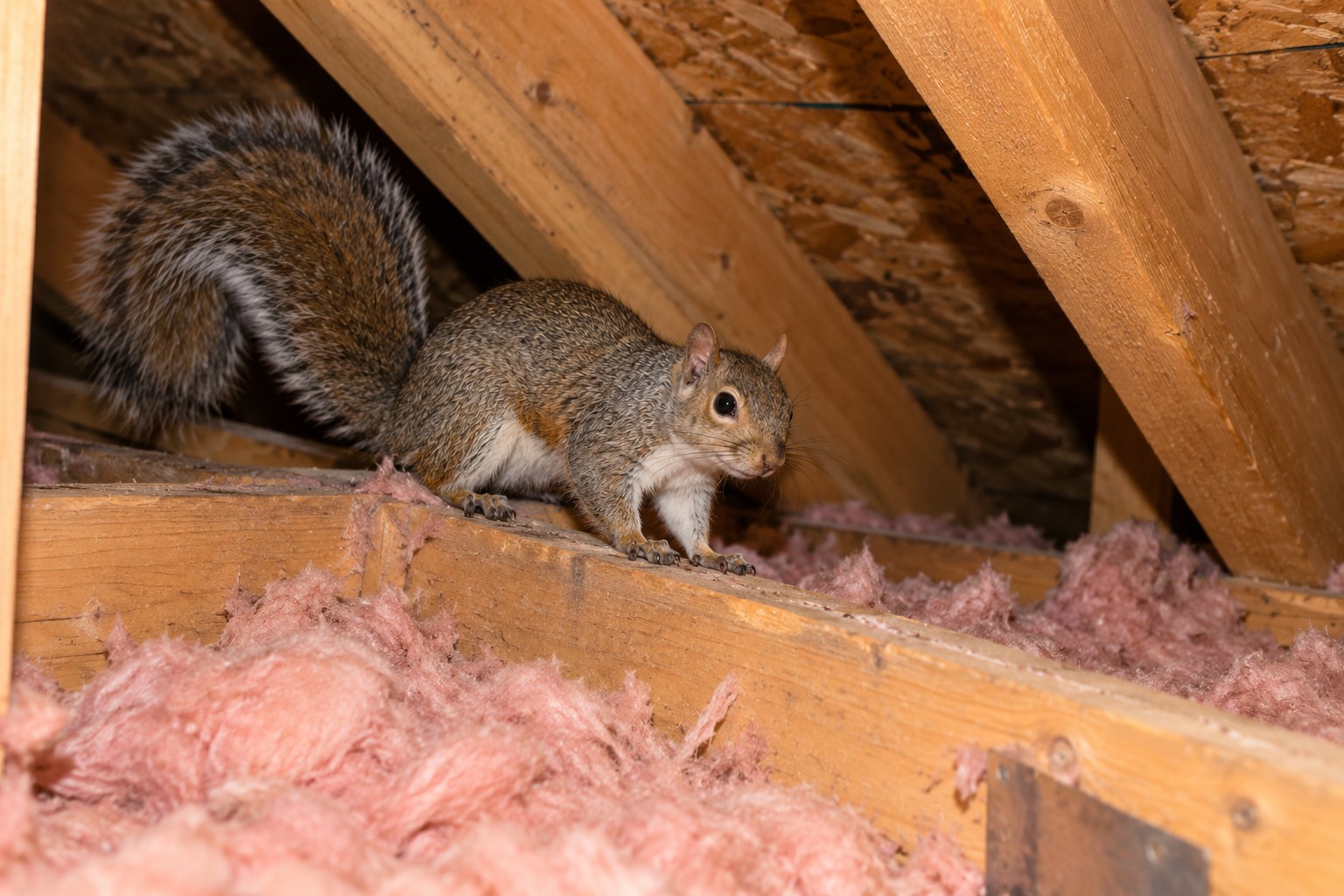
Hearing scratching, scurrying, or chewing sounds above the ceiling can be a strong indication that squirrels have entered your attic. Squirrel problems are common throughout the Niagara Region, especially in homes surrounded by mature trees that provide easy access to rooftops.
Once a squirrel finds a suitable opening, an attic can provide shelter from weather, predators, and other outdoor threats. It may also become a protected location for a female squirrel to raise her young. Unfortunately, squirrels are persistent animals with strong teeth, and their presence can lead to damaged insulation, enlarged entry holes, contaminated areas, and chewed building materials.
Professional squirrel removal involves much more than simply getting the animal out of the attic. The goal is to identify how the squirrels entered, determine whether babies are present, remove the animals humanely, repair the entry point, and reduce the chances of another squirrel getting inside.
Here is how professional squirrel removal from attics typically works and why proper exclusion is so important.
How Do Squirrels Get Into Attics?
Squirrels are skilled climbers and can reach many areas of a home’s exterior that are difficult for homeowners to inspect. Trees, fences, utility lines, neighbouring structures, and downspouts can all help squirrels reach a roof. Once there, they begin looking for vulnerable areas.
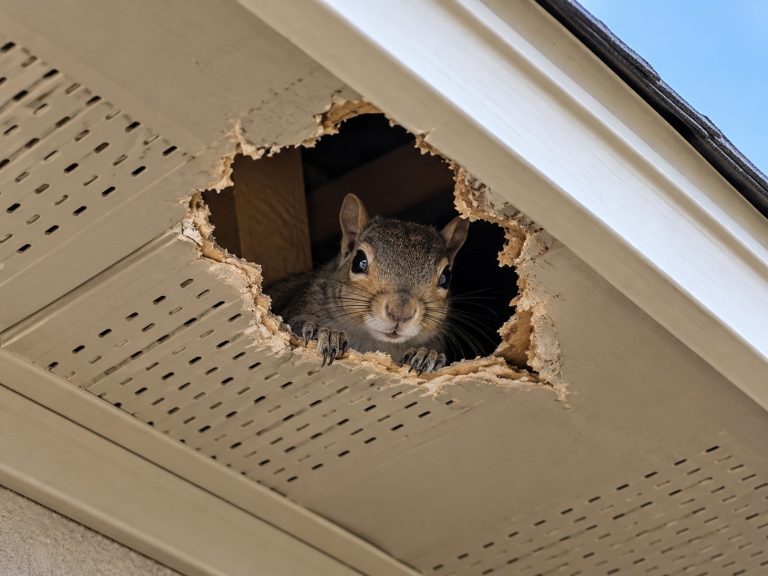
Common squirrel entry points include roof vents, soffits, fascia boards, roof intersections, construction gaps, damaged shingles, and openings around dormers. A squirrel does not always need to find an opening large enough to enter immediately. If the material is weak, it may chew around the edges until the opening becomes large enough.
Older homes can be particularly vulnerable because years of weather exposure may weaken wood and exterior building materials. However, squirrels can also enter newer houses when construction gaps or unprotected roof components provide an opportunity. This is why professional squirrel removal normally begins with an exterior inspection rather than simply focusing on the attic.
Step One: Inspecting the Home for Squirrel Activity
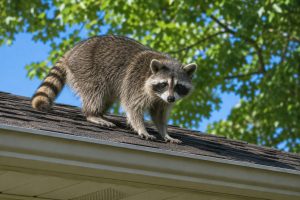
A professional wildlife technician first needs to determine whether squirrels are actually responsible for the activity. Different animals can create similar noises inside an attic. Squirrels, raccoons, birds, bats, and mice may all produce sounds that homeowners notice through ceilings or walls. The timing of the noises can provide useful information. Squirrels are primarily active during daylight hours, particularly around morning and late afternoon. Raccoons are more commonly active at night.
During a squirrel inspection, a technician looks for physical evidence around the exterior of the home. Chewed wood, damaged soffits, enlarged roof gaps, nesting material, fur, staining, and worn areas around openings can help identify an active entry point. Rooflines require particular attention because the opening may not be visible from ground level.
Finding the Main Squirrel Entry Point
Finding the correct entry point is one of the most important parts of professional squirrel removal. A house may have several vulnerable areas, but only one may currently be used by the squirrels. Professionals look for signs showing repeated movement through an opening. For example, the edges of an active hole may appear freshly chewed. Nearby surfaces may contain dirt or staining caused by animals repeatedly entering and exiting.
Determining which opening is active allows the technician to create an exclusion plan without accidentally sealing squirrels inside the attic. Simply closing a hole while animals are still inside can make the situation worse. A trapped squirrel may desperately chew through other parts of the roof, soffit, walls, or interior building materials while attempting to escape.
Checking for Baby Squirrels
Before any exclusion work begins, professionals must consider whether young squirrels could be inside. Female squirrels commonly use attics as nesting locations because they provide warm, protected environments. Depending on the season, a homeowner who hears one adult squirrel may actually have a mother and litter inside the attic.
Young squirrels cannot immediately follow their mother outdoors. This makes baby season an important consideration when choosing a removal method. A technician may inspect the attic or evaluate activity around the entry point to determine whether a nest is likely present.
Separating a mother from dependent young can create animal welfare problems and may cause the mother to damage the home while attempting to regain access. Professional wildlife removal should account for the entire squirrel family rather than only the adult animal visible outside.
Humane Squirrel Removal Using a One-Way Door
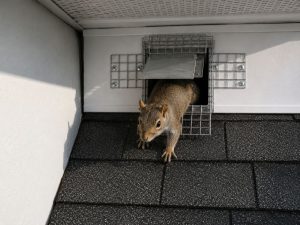
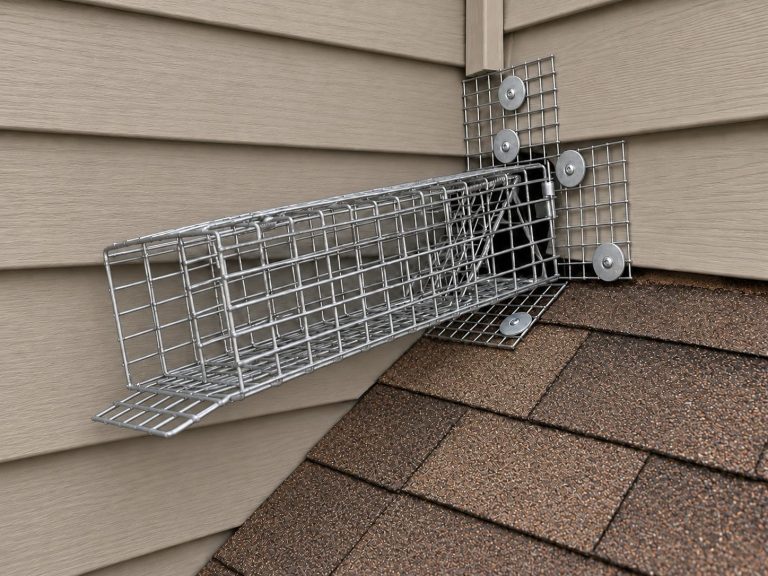
One of the most effective methods for removing squirrels from an attic is a properly installed one-way exclusion door. A one-way door is positioned over the active entry point. The surrounding area is secured so the squirrel must pass through the device when leaving the attic. The design allows the squirrel to exit but prevents it from using the same opening to return.
This method takes advantage of the squirrel’s normal behaviour. Squirrels leave shelter regularly to search for food and water. Instead of capturing and relocating the animal, the exclusion system allows it to leave naturally. Once outside, the squirrel discovers that its previous entrance is no longer accessible. This process is humane, practical, and avoids many of the problems associated with trapping.
Why Professionals Usually Focus on Exclusion
Removing the squirrel is only part of solving the problem. If the original entry hole remains accessible, another squirrel may eventually discover it. Even the same squirrel may attempt to return. Professional squirrel control therefore focuses heavily on exclusion. This means securing the areas animals have used to enter and, when appropriate, reinforcing nearby vulnerable sections.
Durable materials are especially important. Squirrels have powerful incisors and can chew through many materials that appear strong enough to a homeowner. A repair that blocks the opening temporarily but can easily be chewed may only delay another infestation.
Repairing Squirrel Damage
Once the squirrels have successfully left the attic, the one-way door can be removed and the original opening permanently secured. The type of repair depends on where the squirrel entered. A damaged soffit may require reinforcement and screening. A roof opening may need wildlife-resistant materials installed around the affected section. Roof vents and other vulnerable components can sometimes be protected with appropriate screening.
Professionals also inspect the surrounding roofline for additional weak areas. This step matters because squirrels frequently investigate several areas before establishing an entrance. Closing the main hole while leaving a nearby vulnerable opening could allow them to simply move a short distance and chew their way back inside.
What Happens Inside an Attic With Squirrels?
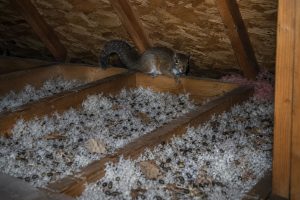
Squirrels can create significant damage if they remain inside an attic for an extended period. One of the most common problems is disturbed insulation. Squirrels may compress, tear, tunnel through, or move insulation while travelling through the attic and creating nesting areas. Nesting material, food debris, urine, and feces can also accumulate.
Chewing is another concern. A squirrel’s front teeth grow continuously, which means squirrels regularly gnaw on materials. Inside an attic, this behaviour may affect wood and other building components. Electrical wiring can also be vulnerable to animal chewing, which is one reason unexplained squirrel activity should not be ignored. The longer an infestation continues, the greater the opportunity for damage to accumulate.
Why Trapping Alone May Not Solve a Squirrel Problem
Homeowners sometimes assume that catching the squirrel will solve everything. The problem is that trapping does not address why the squirrel entered the house. If a roof hole remains open, the property is still vulnerable. Another squirrel may eventually occupy the same space. Trapping can also become complicated when multiple squirrels or dependent young are involved.
Professional exclusion addresses the building itself. Instead of repeatedly removing animals from an accessible structure, the goal is to make the attic inaccessible to squirrels in the first place. That provides a much more durable solution.
Can You Seal a Squirrel Hole Yourself?
Homeowners should be cautious about immediately repairing a suspected squirrel entry point. If you are certain the hole is being actively used, sealing it without confirming that the attic is empty can trap wildlife inside. There is also the possibility of dependent babies being present.
Roof work introduces additional safety concerns. Squirrel entry points are frequently located around steep roof sections, soffits, upper-storey fascia, or difficult roof intersections. A professional wildlife technician can determine whether the opening is active and choose an appropriate exclusion strategy before completing the permanent repair.
Preventing Squirrels From Returning
Once the immediate problem has been resolved, prevention becomes the priority. Tree branches growing close to a house can give squirrels convenient access to the roof. Trimming branches where practical can make the route more difficult, although squirrels are capable jumpers and trimming alone will not wildlife-proof a home.
Roof maintenance is equally important. Loose soffits, deteriorating fascia, damaged vents, and aging roof components should be repaired before squirrels exploit them. Homeowners should pay particular attention to areas where different roof sections meet, since these intersections can sometimes contain construction gaps. Wildlife-resistant screening and professional exclusion work can provide additional protection for vulnerable areas.
Signs You May Need Professional Squirrel Removal
Scratching sounds during the daytime are a common warning sign, but they are not the only indication. You may also see squirrels repeatedly travelling to the same part of the roof, disappearing beneath a soffit, or entering a visible opening. Pieces of insulation or building material around the property can indicate that an animal has been digging or chewing.
Damage around roof vents, fascia, and soffits deserves attention even when you have not yet heard anything inside. A squirrel that has established an attic nest may continue using the same location until the entry point is properly addressed.
Professional Squirrel Removal in Niagara
Squirrel removal is most effective when it combines careful inspection, humane exclusion, entry-point repair, and prevention. Getting the squirrel outside is only the beginning. The home also needs to be secured so that the animal cannot simply return through the same opening.
For homeowners throughout the Niagara Region, professional wildlife removal can also reduce the risks associated with climbing onto roofs, working around active wildlife, and accidentally trapping animals inside the structure.
Book a Squirrel Inspection With Niagara Wildlife Removal
If you hear scratching in your attic or have noticed squirrels repeatedly travelling across your roof, contact Niagara Wildlife Removal to schedule a professional wildlife inspection.
Our technicians can identify active squirrel entry points, check for signs of nesting activity, develop a humane removal plan, and secure vulnerable areas of the home. By focusing on exclusion and proper repairs, we aim to solve the source of the problem rather than simply removing an individual animal.
Book an inspection with Niagara Wildlife Removal today and have your attic checked before squirrel activity leads to additional damage.