Squirrels are a familiar sight across Niagara. They race through neighbourhood trees, climb fences, and often make their way onto rooftops. While they may appear harmless outdoors, squirrels become a serious problem once they enter a home. They can chew through roof vents, soffits, fascia boards, and roof decking before settling into an attic where they build nests, damage insulation, and create expensive repairs.
Many homeowners assume trapping or chasing squirrels away is the best solution. In reality, humane squirrel removal is the safest, most effective, and legally responsible approach. Proper wildlife removal protects both your home and the animals while reducing the chances of future infestations.
If you’ve been hearing scratching noises overhead or have spotted squirrels entering your roofline, here’s what you need to know about humane squirrel removal in Niagara.
Why Squirrels Enter Homes
Squirrels do not enter homes randomly. Your attic provides many of the things they naturally seek. It offers protection from predators, shelter from rain and snow, and a warm environment during Ontario’s changing seasons. Female squirrels are especially attracted to attics because they provide a secure place to raise their young.
Many squirrel infestations begin after the animal discovers a weak point in the roof. Common entry areas include:
- Damaged roof vents
- Loose or deteriorated soffits
- Rotten fascia boards
- Gaps along roof intersections
- Openings around utility lines
- Construction gaps near dormers or roof peaks
Once an entry point is found, squirrels will often continue using it until the opening is professionally repaired.
Signs You Have Squirrels in Your Attic
Early detection can prevent extensive damage. Some of the most common warning signs include hearing scratching or running noises during the early morning or late afternoon. Since squirrels are active during daylight hours, noises heard during the day often point toward squirrels rather than nocturnal wildlife like raccoons.
You may also notice squirrels repeatedly climbing onto your roof or disappearing beneath shingles, soffits, or roof vents. Other common signs include:
- Chewed roof vents
- Damaged fascia boards
- Pieces of insulation outside the home
- Small piles of wood shavings below roof edges
- Droppings in the attic
- Strong odours coming from ceiling spaces
The sooner these signs are addressed, the less damage squirrels typically cause.
Why Humane Removal Is Important
Humane wildlife removal focuses on safely removing squirrels without causing unnecessary harm. Unlike methods that rely on lethal control or relocation, humane exclusion allows squirrels to leave naturally while preventing them from returning. This approach is especially important during baby season.
In Niagara, squirrels commonly give birth during late winter or early spring and again in late summer. If the mother is removed without locating the babies, the young squirrels may remain trapped inside the attic.
Professional wildlife technicians understand breeding cycles and use removal methods designed to keep squirrel families together whenever possible. Humane removal also provides a permanent solution by addressing the reason squirrels entered in the first place.
The Problems With DIY Removal
Homeowners often attempt to solve squirrel problems using repellents, loud noises, bright lights, or by covering the entry hole. Unfortunately, these methods rarely work.
Squirrels are persistent animals that quickly adapt to most scare tactics. If trapped inside, they may chew new openings through wood, shingles, or soffits in an attempt to escape.
Blocking an active entry point can also separate mothers from their young or force squirrels deeper into the home’s structure. Professional removal avoids these problems while minimizing additional damage.
How Humane Squirrel Removal Works
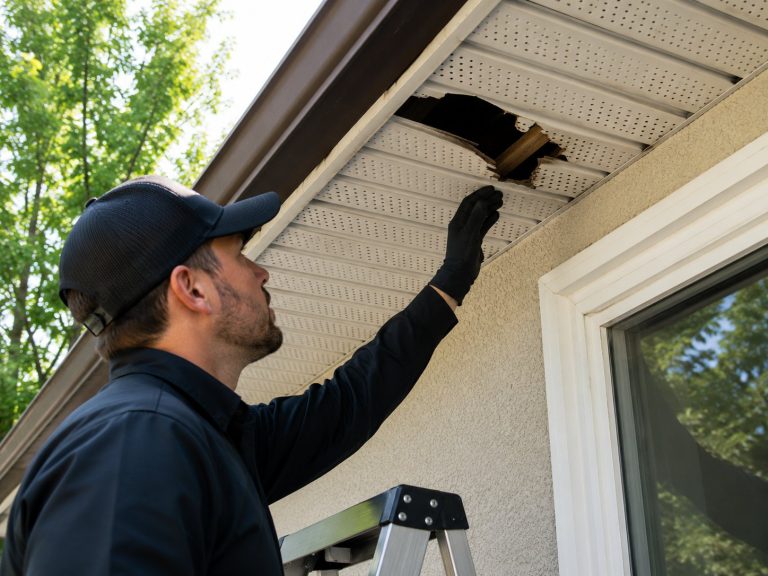
Professional squirrel removal begins with a detailed inspection of the home. Technicians carefully examine the roofline, vents, soffits, fascia boards, chimney areas, and attic to determine exactly how the squirrels are entering.
During the inspection they also look for:
- Active entry holes
- Chewing damage
- Nesting locations
- Baby squirrels
- Additional vulnerable areas around the roof
Every home is different, so identifying all potential access points is essential for long-term success.
Using One-Way Doors
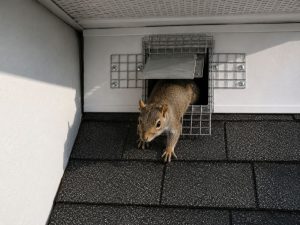
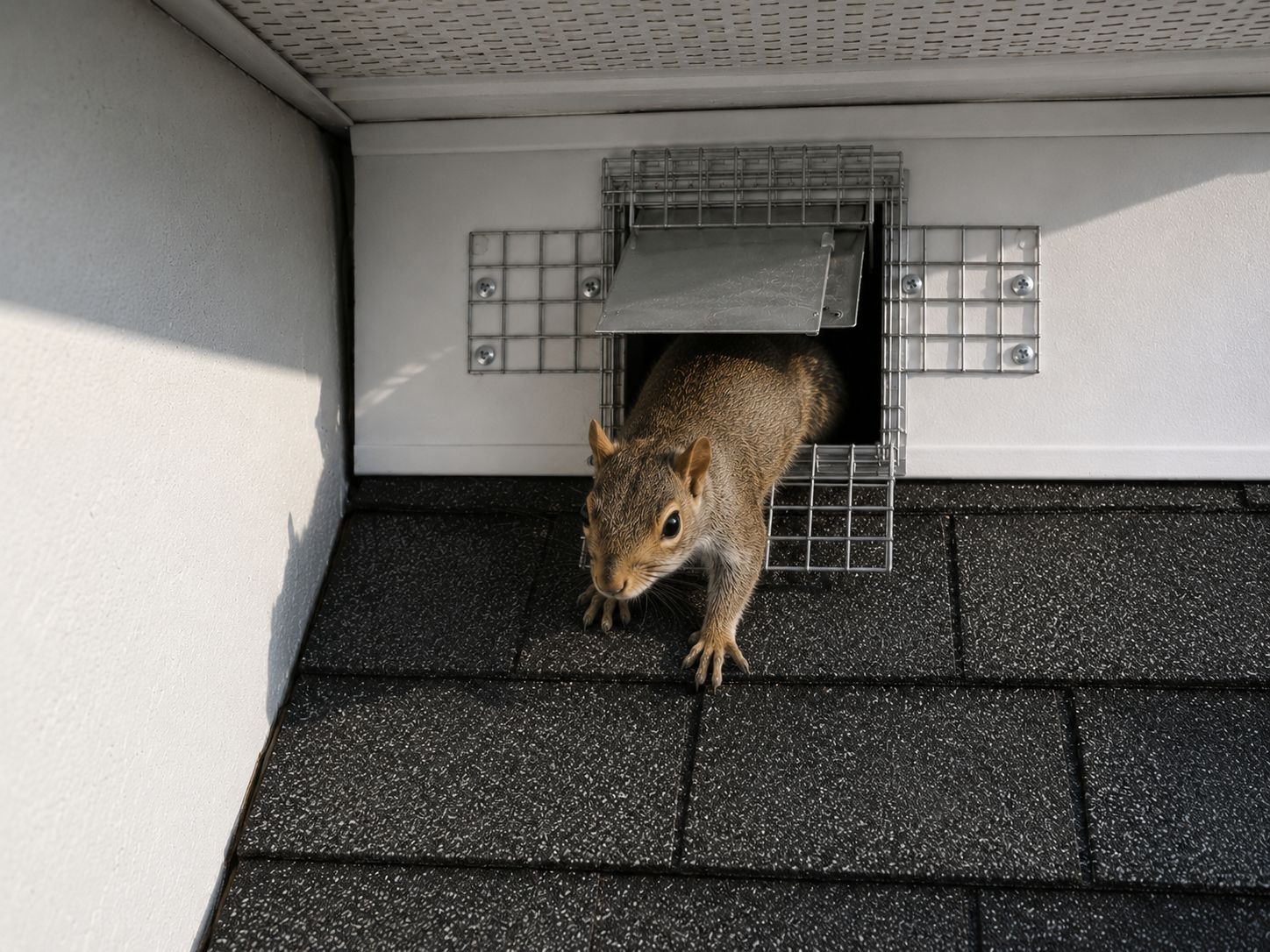
One of the most effective humane removal methods is the installation of a one-way door. This specialized device is placed over the squirrel’s primary entry point. When the squirrel leaves the attic to search for food or water, it can exit normally through the door. Once outside, however, it cannot re-enter the home. This allows the squirrels to leave safely without becoming trapped. After confirming the attic is empty, the one-way door is removed and the opening is permanently sealed.
Baby Squirrel Removal
Baby season requires additional care. If young squirrels are discovered inside the attic, technicians carefully remove them by hand and place them into a secure reunion box positioned near the original entry point. The mother is then able to retrieve her babies and relocate them to another natural nesting location.
This process keeps the family together while allowing permanent repairs to be completed. Attempting to remove squirrels without checking for babies often leads to orphaned young animals, unpleasant odours, and additional wildlife issues inside the attic.
Repairing Wildlife Entry Points
Removing the squirrels is only part of the job. Once the attic is confirmed empty, damaged areas should be repaired using durable wildlife-resistant materials. Common repairs include replacing damaged roof vents, repairing fascia boards, securing loose soffits, reinforcing roof intersections, and sealing construction gaps.
Professional wildlife-proofing prevents new squirrels from using the same opening in the future. Simply patching damaged wood without reinforcing it may allow determined squirrels to chew through again.
Cleaning Up After Squirrels
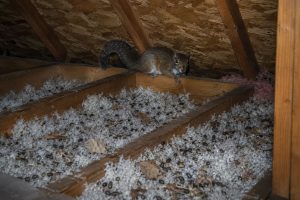
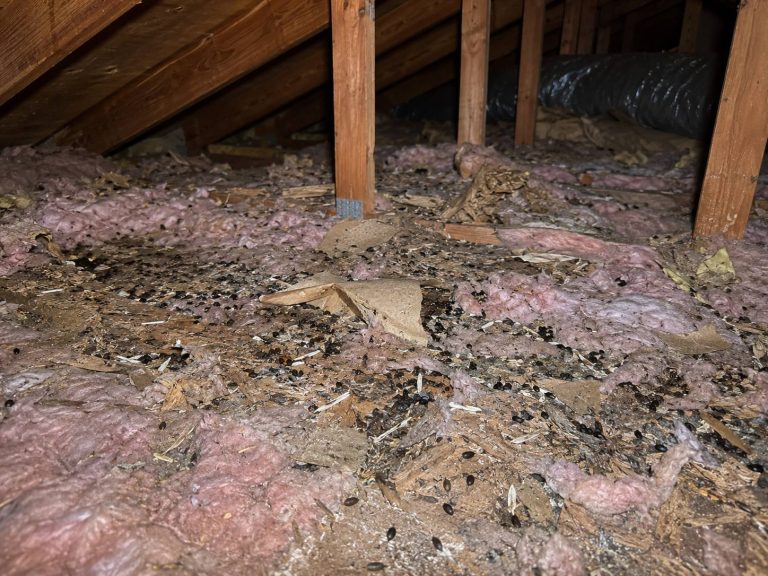
Many homeowners are surprised by how much damage squirrels leave behind. Inside the attic, technicians often find:
- Torn insulation
- Nesting materials
- Food caches
- Droppings
- Urine contamination
- Chewed wiring
- Damaged wood
Depending on the severity of the infestation, attic cleanup and insulation replacement may be recommended. Removing contaminated materials helps restore energy efficiency while reducing odours and improving the overall condition of the attic.
Preventing Future Squirrel Problems
Prevention is one of the most valuable parts of professional wildlife removal. Routine roof inspections help identify developing problems before squirrels discover them.
Keeping tree branches trimmed away from the roof can also reduce easy access, although squirrels remain excellent climbers and may still reach your home from nearby structures.
Regular maintenance of roof vents, soffits, fascia boards, and flashing helps eliminate the weak points squirrels commonly exploit. Homes that receive periodic wildlife inspections are far less likely to experience recurring infestations.
Why Professional Removal Saves Money
Many homeowners hesitate to address squirrel problems immediately because the noises seem minor. Unfortunately, squirrels rarely stop causing damage once they enter an attic. Over time they may destroy insulation, enlarge entry holes, chew electrical wiring, contaminate attic spaces, and weaken roof structures.
Early removal is almost always less expensive than repairing months of accumulated damage. Professional removal also reduces the likelihood of repeat infestations, saving additional repair costs in the future.
Why Choose Niagara Wildlife Removal?
Niagara Wildlife Removal specializes in humane squirrel removal using safe, effective exclusion methods designed for Ontario homes.
Our experienced technicians perform detailed inspections to locate every entry point, safely remove squirrels, reunite mothers with their babies when necessary, and permanently repair damaged roof areas to help prevent future wildlife problems.
Every removal is completed with the goal of protecting both your home and the animals while providing a long-lasting solution.
Contact Niagara Wildlife Removal
If you’ve seen squirrels running across your roof, noticed chewing damage around your soffits or vents, or have been hearing scratching noises coming from your attic, don’t wait for the damage to become worse.
Niagara Wildlife Removal provides professional, humane squirrel removal services throughout Niagara Falls and the surrounding Niagara Region. We safely remove squirrels, repair wildlife entry points, and help homeowners protect their homes from future infestations using proven exclusion techniques.
Contact Niagara Wildlife Removal to schedule a professional inspection and let our experienced wildlife technicians safely remove squirrels while keeping your home protected for years to come.